MAPLE BOARDS
Quilted maple cutting board: What to know before you buy or build
Quilted maple cutting board: learn how figure, species, grain layout, and care affect appearance and daily use.
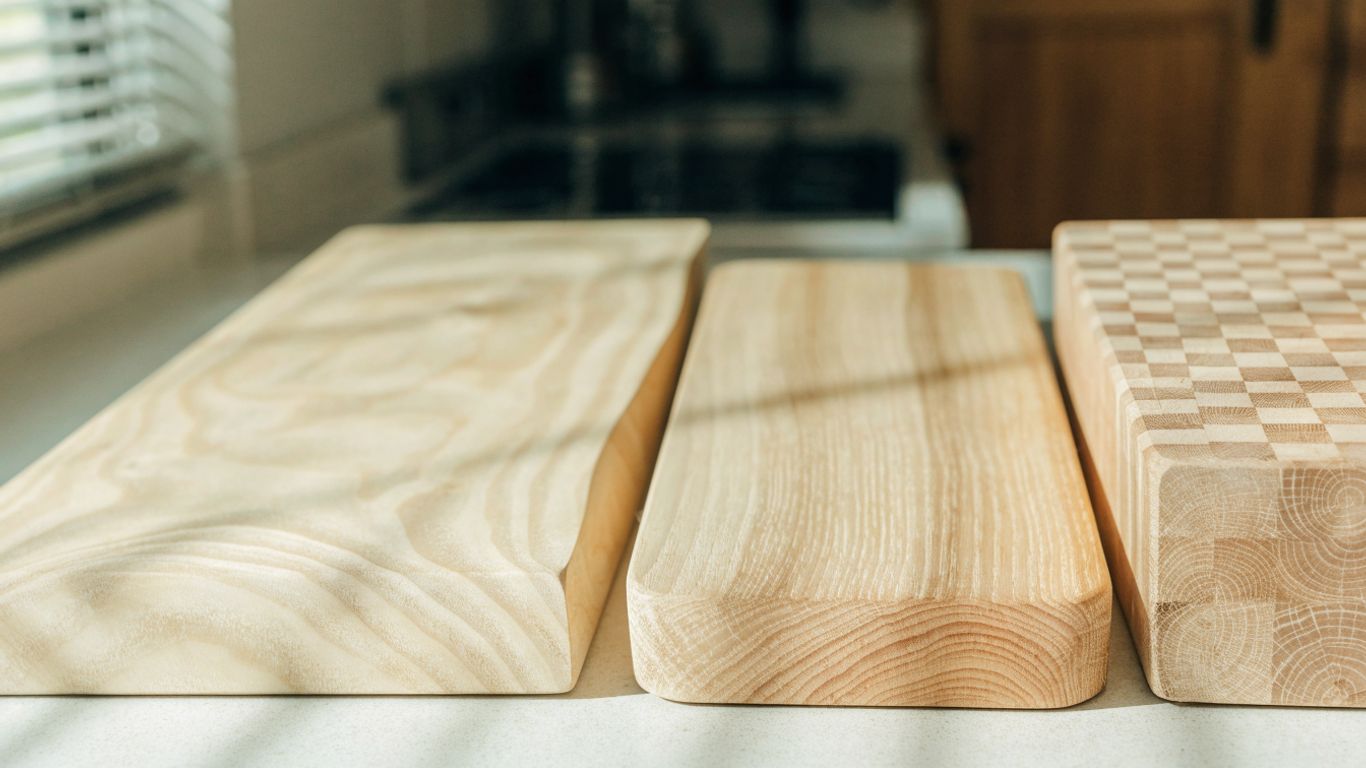
The short answer
A quilted maple cutting board is defined by its figure, not by a particular maple species. For everyday use, the species, grain orientation, joinery, and finish matter at least as much as the eye-catching pattern.
- Quilted figure is a naturally occurring grain pattern, not a wood species.
- The pattern’s appearance can shift with the board’s cut, grain direction, and light.
- Ask whether the wood is hard or soft maple; figure alone says little about working performance.
- Construction and dry, well-fitted joints help determine how a board handles kitchen use.
- Hand-wash, dry promptly, and condition the surface as needed.
What “quilted maple” means
“Quilted maple” describes maple with a rippling, rounded figure that can look three-dimensional as you move it in the light. It is not a species name, so the words alone do not tell you how hard the wood is or how the board is built. If you are choosing one for regular chopping, ask what kind of maple is used and inspect the construction.
Quilted figure is a grain pattern, not a separate species
The quilted effect comes from the way the grain appears to undulate across the wood. The surface can look like a field of small, connected waves or cushions, especially when the board is tilted. It is a visual feature of the wood, not a coating or a pattern printed on top.
Because “quilted” describes figure rather than species, a seller’s label does not tell you whether the board is made from hard or soft maple. That distinction matters more for practical decisions than the figure does. Ask for the species name, and if you want a broader guide to maple figure and use, see this overview of birdseye maple boards, another naturally figured maple.
How quilted figure differs from curly or flame maple
Quilted figure tends to read as a series of rounded, connected ripples. Curly or flame figure is more often seen as repeated bands or stripes that cross the grain. These are useful visual descriptions, but the boundaries are not always crisp; one piece of wood may show more than one kind of figure.
| Figure | Common visual impression | What to look for |
|---|---|---|
| Quilted | Rounded, pillow-like ripples | Broad, connected waves |
| Curly or flame | Repeating bands or stripes | Lines that brighten and darken with angle |
| Plain | More even, subtle grain | Less pronounced shifting contrast |
The table is a viewing guide, not a grading system. Woodworkers and sellers may use figure terms a little differently, so judge the actual board rather than relying on the label alone.
Why the pattern can look different from board to board
Figure varies naturally with the piece of wood and how it was sawn. A board may have a dramatic pattern in one area and quieter grain a few inches away; neighboring boards from the same log need not match. Photos also flatten the effect, which is why a moving view can tell you more than a single image.
How the figure affects the board’s appearance
Quilted figure can make a maple board feel visually lively without changing its function. The pattern is most apparent when the board catches light at an angle, and a clear finish can increase its contrast. Color and figure vary from piece to piece, so expect natural irregularity rather than a perfectly repeated design.
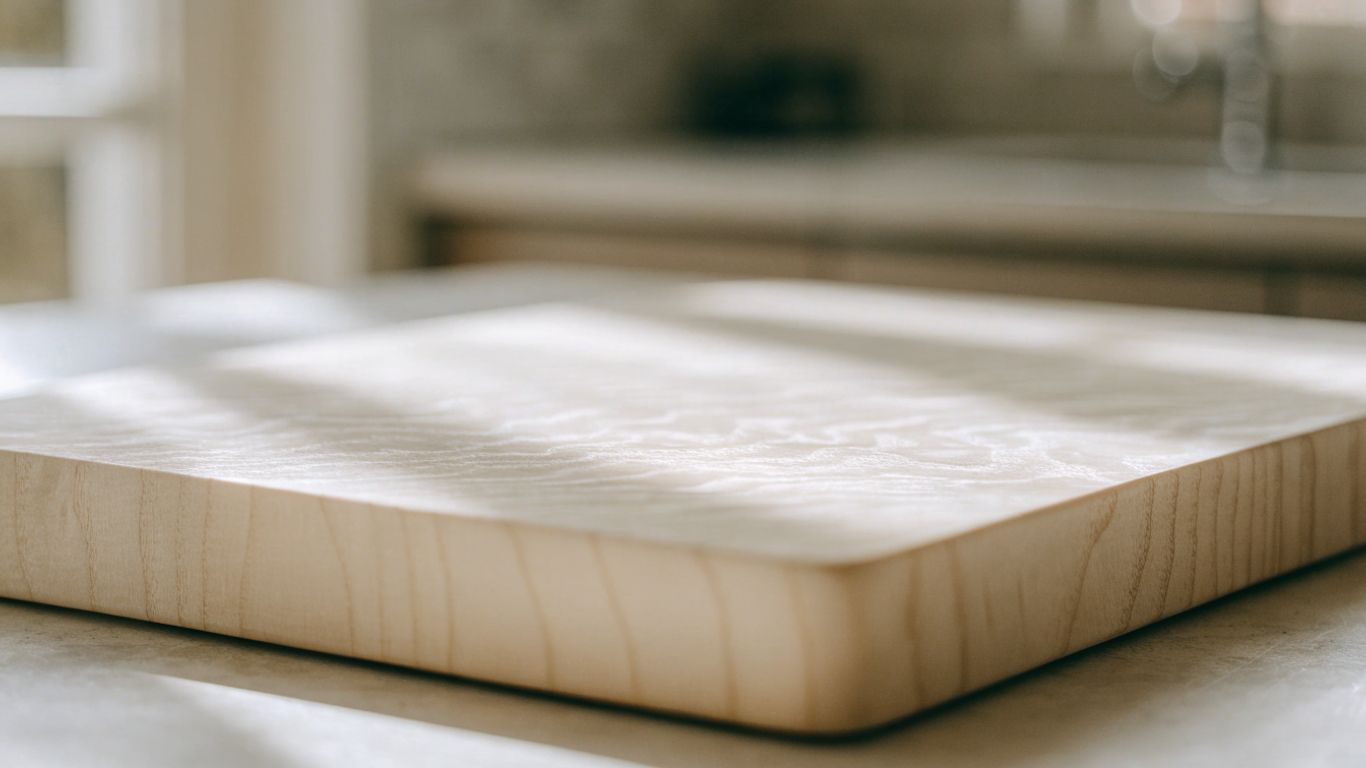
Grain direction and lighting change the visual effect
The grain’s direction and the board’s orientation affect how much the figure seems to move. Turn a board slightly and bright areas can shift while darker ones recede. That change is part of the appeal, but it also means a product photo under strong studio lighting may not match the board’s appearance in your kitchen.
If you are buying remotely, ask for a few views taken from different angles and in ordinary light. One example of a finished piece is this quilted flame maple board; use images like that to understand the look, not as a promise that another piece will have the same pattern.
Clear finishes bring out the figure without creating it
A clear, food-appropriate finish can deepen the wood’s color and make the figure easier to see. It does not create the quilted pattern, and it cannot make different boards look identical. As the surface dries, the wood may look duller; conditioning can restore some of its richer appearance without changing its underlying grain.
The practical point is simple: treat finish as surface care, not a way to fix a board whose figure you do not like. Look at the unfinished or lightly finished wood as carefully as you can before choosing.
Color and pattern variation are normal in natural wood
Maple ranges from creamy white to light tan, and quilted areas can vary in contrast across a single board. Small shifts in color, grain, and figure are ordinary characteristics of natural wood. They are not, by themselves, evidence of a defect.
A custom piece may combine boards with different tones or figure. If you want a particular look, ask how much variation is expected and whether the seller can show the actual board. Be clear about the difference between a preference for a lively pattern and a demand for a perfectly uniform one; wood is not especially good at taking instructions.
Is quilted maple practical for a cutting board?
A quilted maple cutting board can be practical, provided the wood species and construction suit the work you plan to do. The figure is a visual bonus, not a durability rating. For regular prep, prioritize a suitable maple species, a sound layout, and a finish you are willing to maintain.
Confirm the maple species instead of relying on the figure
Ask whether the maker identifies the wood as hard maple or soft maple, rather than stopping at “figured maple.” Hard maple has a Janka hardness rating of 1,450 lbf, while soft maples vary by species. The name “quilted” does not answer that question.
When a listing gives only a figure description, ask for the species before comparing it with other boards. A clear answer makes the board easier to assess; a striking surface cannot fill in missing construction details.
Compare hardness, dent resistance, and knife wear
Hardness is one consideration, not a complete measure of board quality. A harder surface may resist dents better, while a very hard or rough surface can feel less forgiving under a knife. The wood species, board orientation, finish, and your own cutting habits all affect how a board feels and wears.
Use hardness figures as a comparison point, not as a guarantee about knife performance. Look for a smooth, even working surface and consider whether the board is meant for everyday chopping or occasional use. The right balance is a surface that holds up to your routine without making knife work unpleasant.
Decide whether the board is for regular prep or display
If you plan to cut on the board daily, consider how easily you can wash, dry, and maintain it, as well as how much visible wear you can accept. A particularly striking piece may also be kept mostly for serving or display. Either choice is reasonable; the trouble comes from buying for one purpose and expecting the board to excel at the other without care.
How construction choices affect performance
The layout can change both the appearance and the feel of a figured board. Face-grain, edge-grain, and end-grain construction expose the wood in different ways, so the quilted pattern may be more or less obvious. Good drying and accurately fitted joints matter whichever layout you choose.
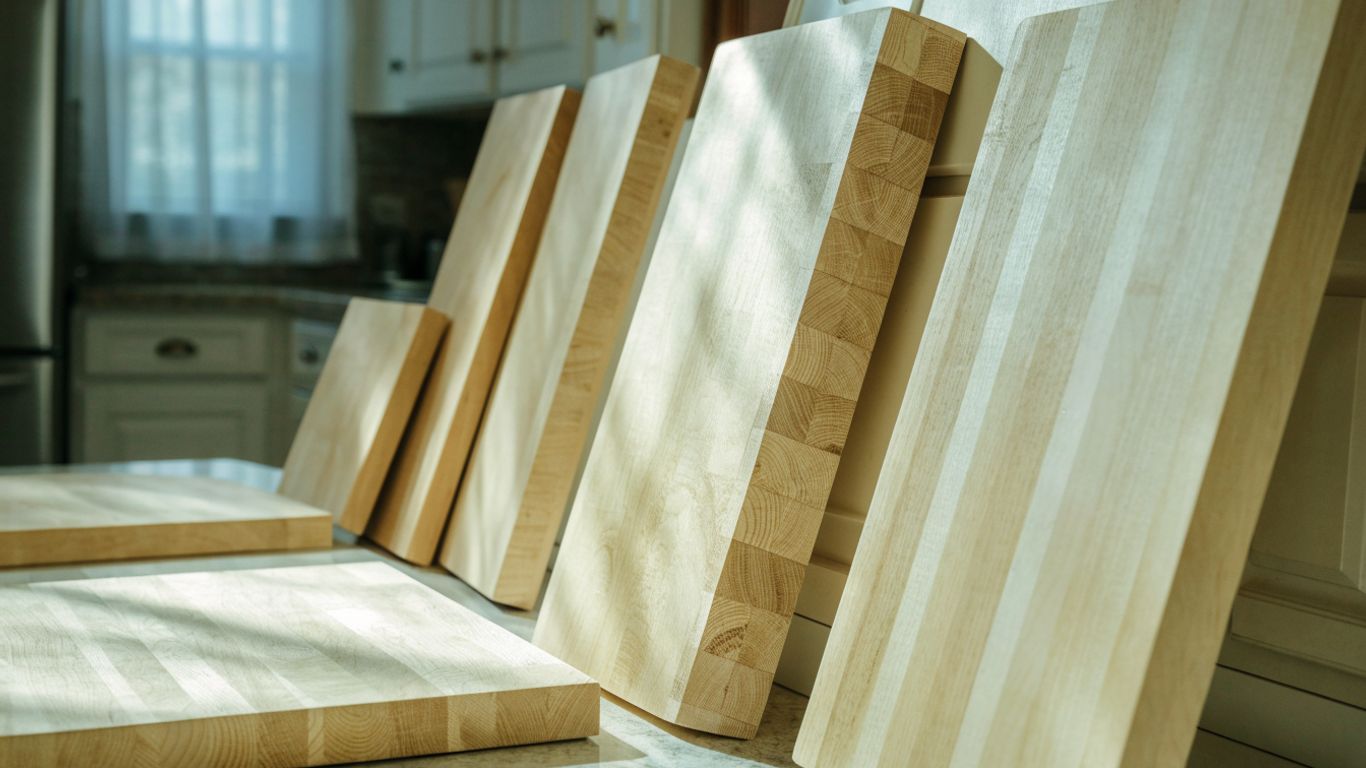
Face-grain and edge-grain layouts show the figure differently
Face-grain boards show the broad surface of the wood, so the figure can appear more continuous across a wide area. Edge-grain boards are assembled with the edge of each strip facing up; their seams and long bands can interrupt or redirect the pattern. Neither layout is automatically the better choice, but they produce noticeably different looks.
When comparing them, look at how strips are arranged and whether the joints appear tight. For a clear example of a documented end-grain option, the Bevel & Bond end-grain maple board is made from North American hard maple and measures 17 × 13 × 1.75 inches. It is an example of construction and dimensions, not a claim about quilted figure.
End-grain construction changes the look and cutting feel
End-grain boards expose the ends of the wood fibers at the surface, usually as a pattern of small blocks. That arrangement can break up a continuous quilted figure, and the board may look more like a mosaic than a single flowing panel. The feel under a knife differs from a face-grain surface, so if possible, handle a similar construction before buying.
The Bevel & Bond Board is an end-grain hard maple board with a juice groove and non-slip feet. Those details describe its documented construction; they do not mean every end-grain board has the same features or feel.
Drying, glue joints, and wood movement matter for stability
Wood responds to changes in moisture, and glued-up boards rely on carefully prepared stock and sound joints. Look for an even surface and seams that close neatly, with no visible gaps or glue ridges. A stable base helps the board sit securely, but it does not replace good care or sound construction.
Before you buy, ask how the wood was dried and whether the board is intended for food preparation. A board should be made to handle ordinary washing, but no solid-wood board should be soaked or left wet for long periods.
What to check before buying or building
Before you choose a board, get the basics in writing: species, grain layout, dimensions, and finish. Then inspect the surface and joints, and consider whether you can store and clean the board comfortably. Figure may catch your eye first, but the details below are what help you make a useful comparison.
Look for clear species and construction details
A listing should identify the maple species or clearly say when it is unknown, and it should describe the grain layout. Ask how the board is finished and whether it is intended for use as a cutting surface. If you are building, identify the wood before milling and plan the layout around the grain and final board size.
The Bevel & Bond Board is listed as North American hard maple, with a 1.75-inch thickness and a 17 × 13-inch surface. Those specifics are helpful comparison points, but they do not make it a quilted maple board; the product description does not claim that figure.
Check the board for tight joints, flatness, and a stable base
Look closely at the seams and set the board on a flat surface if you can. It should sit evenly, without obvious rocking, open joints, or a finish that feels rough where you will cut. A practical inspection can be brief, but it should cover more than the most photogenic patch of grain.
For a quick buying check, focus on these four points:
- Confirm the maple species and grain orientation.
- Inspect seams for gaps, raised glue, or uneven transitions.
- Check that the board sits flat and is manageable to lift.
- Ask what finish is used and how the maker recommends caring for it.
These checks do not predict every change a board may experience, but they help you spot avoidable questions before the board is in your kitchen. If any detail is unclear, ask before ordering rather than guessing from a close-up photo.
Choose a food-safe finish and a useful size
Choose a finish intended for food-contact surfaces and ask what it contains. The board should also fit your counter, sink, and storage spot; a board that is awkward to lift or wash can become an inconvenient one quickly. If you want help matching dimensions to a kitchen routine, compare your workspace with the board’s stated measurements before you buy.
How to use and care for a quilted maple board
Care for a quilted maple board as you would another wooden cutting board: wash it by hand, dry it promptly, and condition it when the surface looks dry. Avoid soaking and dishwasher cycles, which expose wood to prolonged water and heat. Regular, simple care is easier than trying to rescue a board after neglect.
Wash by hand and dry it promptly
Use mild soap and warm water, then dry the board with a towel and stand it upright so air can reach both sides. Do not leave it in a sink full of water or put it in the dishwasher. Clean both sides as needed, rather than repeatedly wetting just one face.
For a visual walkthrough of basic wooden-board care, use this video search as a starting point and check that the advice matches the maker’s instructions.
Apply a food-safe conditioner when the wood looks dry
When the surface looks pale or feels dry, apply food-grade mineral oil or a conditioner made for cutting boards, following its directions. A monthly check is a useful starting point, but how often you condition depends on use and your kitchen’s conditions. Wipe away excess rather than leaving a sticky layer.
Protect the surface from soaking, heat, and prolonged sun exposure
Keep the board away from standing water, hot pans, and long stretches of direct sunlight. These conditions can contribute to uneven drying or surface changes. Store it where air can circulate, and let both faces dry after washing.
Choosing a quilted maple cutting board
Quilted maple is a striking grain pattern, but it does not tell you the species, layout, or workmanship of a board. Confirm those details, choose a construction that suits your prep habits, and keep the board clean, dry, and conditioned. That way, the figure is a welcome feature rather than the only reason you bought it.
Frequently Asked Questions
Is quilted maple a separate kind of maple?
No. “Quilted” describes a figure in the wood, not a separate species. Ask whether the board is made from hard maple, soft maple, or another identified maple species.
Is quilted maple good for cutting boards?
It can be, if the species and construction are appropriate for your intended use. The figure itself does not establish how durable or practical the board will be.
Does quilted maple have to be hard maple?
No. Quilted figure does not identify the species. Check the maker’s description or ask directly before you buy.
What does quilted maple look like?
It often has rounded, connected ripples that seem to shift as the board moves in the light. The pattern’s strength and direction vary from piece to piece.
Is quilted maple the same as curly maple?
No. Quilted figure usually looks like broader, rounded waves, while curly or flame figure is commonly seen as repeated bands. A piece may show more than one type of figure.
Does a clear finish create the quilted pattern?
No. A clear finish can deepen the color and make existing figure easier to see, but the pattern comes from the wood itself.
How should you care for a quilted maple cutting board?
Wash it by hand with mild soap and warm water, dry it promptly, and condition it with food-grade mineral oil or a suitable board conditioner when the surface looks dry. Do not soak it or put it in the dishwasher.