MAPLE BOARDS
Spalted maple end grain cutting board: what to know before you buy
A practical guide to choosing, inspecting, and caring for a spalted maple end grain cutting board.
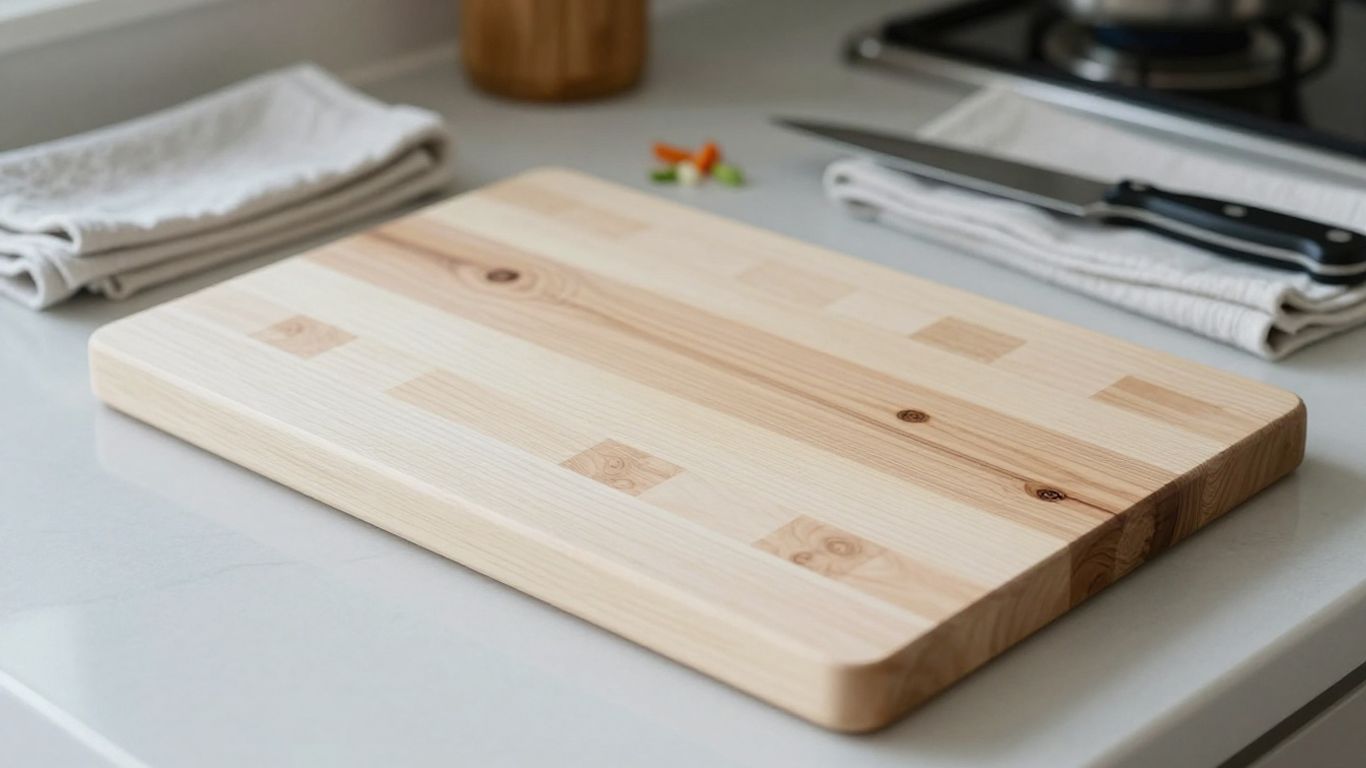
The short answer
A spalted maple end grain cutting board combines naturally patterned maple with a block-style construction. Its appeal depends on sound wood and solid joinery, so inspect the board as carefully as you admire its figure.
- Spalting creates dark markings in maple; it does not make the wood a separate species.
- End-grain boards are assembled from blocks with their cut ends facing up.
- Pattern alone does not tell you whether the wood is sound or the construction is strong.
- Check for flatness, tight joints, cracks, and a size you can lift and store.
- Hand-wash, dry promptly, and condition the wood as needed.
What spalted maple is, and what it isn’t
Spalted maple is maple with naturally formed dark lines or patches in the wood. A striking pattern can make a board feel one of a kind, but it is not a guarantee of quality. For a working cutting board, sound wood and careful construction matter more than dramatic markings.
How spalting creates dark lines and patterns
Spalting refers to patterns that develop as fungi interact with wood, often leaving dark zone lines or areas of contrasting color. The marks can look inked or sharply drawn against pale maple, but they are part of the wood’s appearance rather than a painted design. How clearly they show depends on the particular piece of wood.
Why spalting is a feature of the wood, not a separate species
“Spalted” describes a visual condition, not a maple species. The underlying wood is still identified by its species, and that distinction matters because a board’s working qualities depend on the wood itself and its condition. If you are comparing natural markings with damage, this guide to markings that can resemble defects offers a useful parallel.
How to tell natural spalting from added color or stain
Natural spalting tends to follow irregular paths within the grain, while added color may look more uniform or sit mostly on the surface. That is a clue, not a foolproof test: finishes can change the appearance, and photographs can make details hard to judge. Ask the maker whether the dark pattern is natural and whether any stain or colorant was used.
Why dramatic patterns can vary from board to board
Spalting follows the individual piece of wood, so no two boards should be expected to have identical lines. Some patterns are fine and delicate; others form broad dark areas. You can look at a spalted maple board example to get a sense of how much the figure can vary, but treat any listing image as a sample, not a promise of the exact board you will receive.
How end-grain construction affects the board
An end-grain board is assembled so the cut ends of its wood blocks face upward. That gives the surface a checkerboard-like appearance and a different feel under a knife than a board with long, parallel grain. The trade-off is straightforward: this construction can be appealing and substantial, but often means more weight and more joints to inspect.
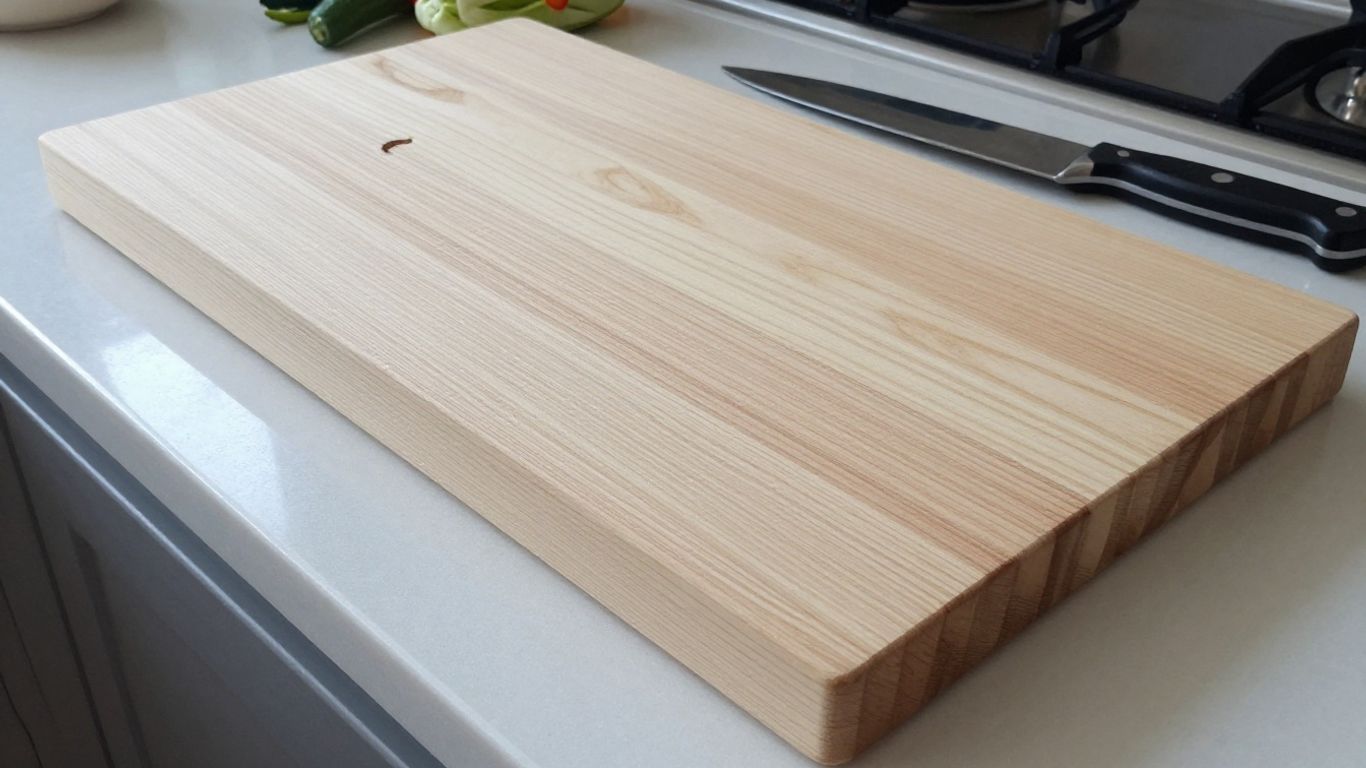
How the wood blocks are arranged
In an end-grain board, blocks are joined with their end grain exposed at the working surface. Look for a consistent layout, cleanly aligned blocks, and joints that appear closed. A tidy pattern is attractive, but the important question is whether the pieces are joined securely and the surface is even.
What end grain can mean for knife marks and surface wear
Because the wood fibers meet the knife differently on an end-grain surface, some cooks prefer its feel while chopping. Knife marks still happen, and no wood board should be treated as immune to wear. The construction terms can help you compare options: the end-grain and edge-grain differences for maple boards include trade-offs in knife feel, weight, and care.
| Construction | Visible surface pattern | Practical point to consider |
|---|---|---|
| End grain | Small blocks or squares | Check block alignment and glue joints |
| Edge grain | Long, narrow strips | Compare the board’s thickness and handling |
| Face grain | Broad wood faces | Look closely for wear across the surface |
The table is a starting point, not a quality ranking. For a specific size reference, the Bevel & Bond End-Grain Maple Cutting Board is listed as 17 × 13 × 1.75 inches and about 10 pounds; those are product details, not a standard for every end-grain board.
Why end-grain boards are often thick and heavy
A board built from joined blocks may be thicker and heavier than a simple, thin prep board. Weight can help it feel steady on the counter, but it also affects whether you can move it easily, wash it in your sink, and store it upright. Think about those ordinary tasks before treating heft as an automatic advantage.
How glue joints and construction affect long-term strength
Every joint is part of the board’s structure, so neat assembly matters alongside wood selection. Ask whether the blocks are tightly joined and inspect for gaps or separation, especially around the edges. The Bevel & Bond End-Grain Maple Cutting Board is documented as hard maple and made in the USA; those facts do not, on their own, establish how another maker builds a spalted board.
Safety and durability considerations
The dark pattern itself is not a useful measure of a board’s durability. What matters more is whether the wood is firm and stable, whether joints are intact, and whether the surface can be cleaned and maintained. A board with beautiful figure but soft or damaged areas is a poor choice for regular food preparation.
Why sound, stable wood matters more than the spalting itself
A board needs to be sound enough for ordinary cutting and washing. Spalting may create the visual character you want, but the appearance cannot tell you everything about the wood’s condition. Give a firm, well-joined board with modest figure more credit than a dramatic one with questionable areas.
How to spot soft, crumbly, or cracked areas
Look closely at the whole surface, the edges, and the spaces between blocks. Avoid areas that appear crumbly, deeply cracked, or separated from neighboring wood. If you can examine the board in person, check whether the surface feels firm and even rather than relying only on a close-up photograph.
Why a food-safe finish does not fix damaged wood
A finish can help protect a sound wood surface, but it cannot repair a crack or make soft wood structurally sound. Ask what finish is used and whether the board is intended for food contact, while treating that answer separately from the condition of the wood. A clean finish is no substitute for solid material underneath it.
What to ask the maker about wood selection and construction
Clear, practical answers are a good sign. A maker should be able to explain what maple was used, how the blocks were arranged, and what finish was applied. If you are unsure what to check in the joints and finish, this maple board quality checklist covers several useful inspection points.
What to inspect before buying
Inspect the board as a kitchen tool, not just as a piece of figured wood. Check that it sits flat, that the joints look closed, and that its dimensions fit your counter, sink, and storage space. A listing can show the pattern beautifully while saying very little about those everyday details.
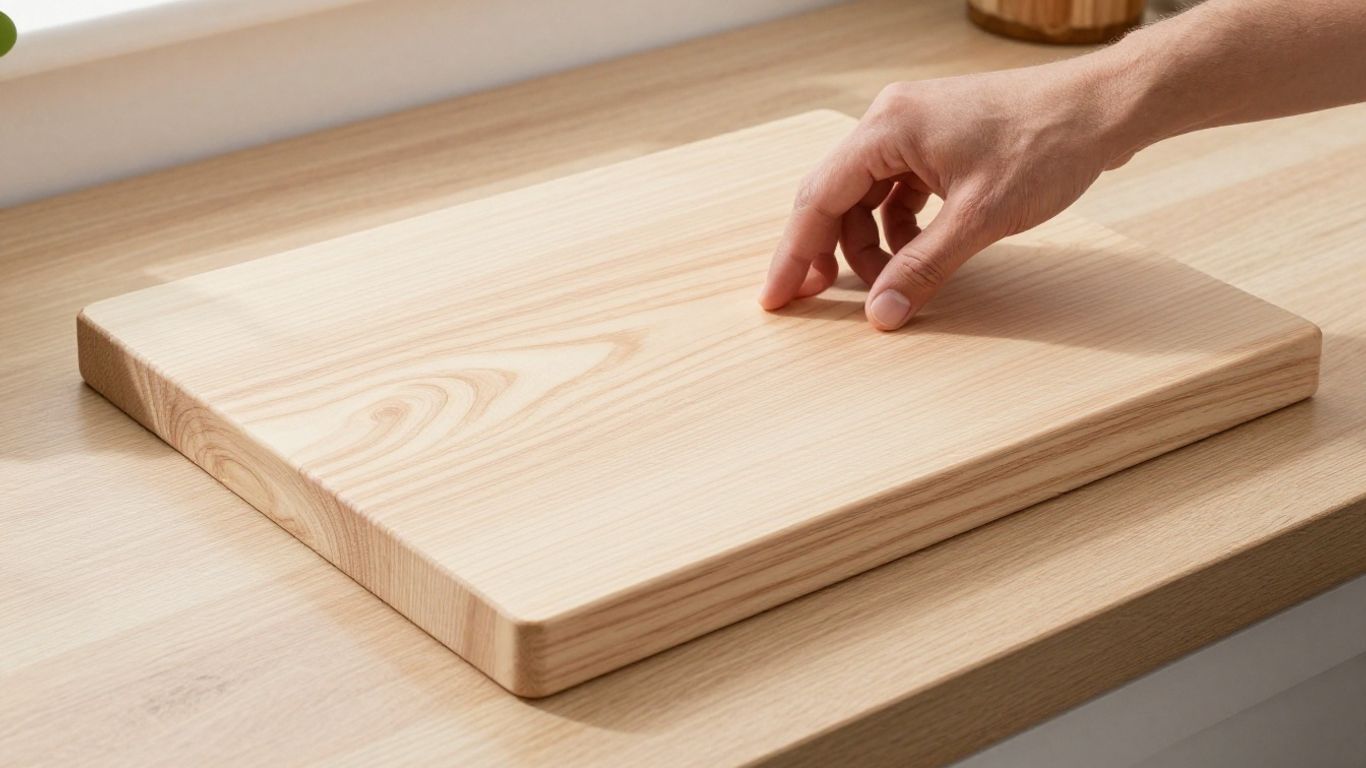
Check for a flat surface and tight joints
Set the board on a flat counter, if possible, and see whether it rocks. Look for joints that meet cleanly without visible openings. Small variations in natural figure are expected; gaps or a noticeably uneven surface deserve a question before you buy.
Look for cracks, gaps, and uneven blocks
A quick inspection is easier if you know where to look. Check the board’s top, sides, and corners rather than judging it from the center alone. A compact checklist helps keep the pattern from distracting you:
- Scan the surface for cracks or splits.
- Check between blocks for open or separating joints.
- Look across the board for uneven or raised sections.
- Ask about any soft-looking or crumbly area.
If the maker can explain a mark and show that the surrounding wood is sound, you can decide whether it is simply part of the figure. If the answer is vague, consider another board.
Consider board size, thickness, and weight
The board should suit your actual prep routine, not an imaginary kitchen with limitless counter and storage space. Measure the available area and consider whether the board will fit in your sink for hand-washing. The Bevel & Bond End-Grain Maple Cutting Board is about 10 pounds at 17 × 13 × 1.75 inches, a useful concrete reference when judging how much board you want to handle.
Ask about finish, edge treatment, and how the board was made
Ask whether the finish is intended for food-contact use, how the blocks were joined, and whether the edges are eased or left sharp. A maker’s answer should help you understand the board without asking you to guess from a photo. You may also want to ask how the board should be cleaned and when the maker recommends conditioning it.
How to clean and care for a spalted maple board
Treat a spalted maple board like other wooden cutting boards: wash it by hand, dry it promptly, and avoid prolonged moisture. Regular care is simple, but it works best when it is part of the routine rather than a rescue mission after the board has been left wet overnight.
Wash by hand and dry it promptly
Use mild soap and warm water, then dry the board thoroughly with a towel. Let it finish drying upright with air able to reach both sides. Avoid leaving standing water on the surface or putting the board away while it is still damp.
Keep it away from soaking and the dishwasher
Do not soak a wooden board or put it in the dishwasher. Extended heat and moisture can stress wood and its joints. The Bevel & Bond End-Grain Maple Cutting Board care guidance likewise specifies hand-washing; for any board, follow the maker’s instructions if they are more specific.
Reapply food-safe mineral oil or board conditioner as needed
When the wood looks dry, apply food-grade mineral oil or a suitable board conditioner according to its directions. The right interval depends on use and conditions, so watch the surface rather than relying on a calendar alone. Wipe away excess oil after it has had time to absorb.
Use separate boards for raw meat and ready-to-eat foods
Use a separate board for raw meat and foods that are ready to eat, and clean boards promptly after use. That simple kitchen habit helps keep raw-food juices away from ingredients that will not be cooked. Keep the board’s surface clean and in good repair as part of the same routine.
Who should choose a spalted maple end grain board
Choose this style if you want distinctive natural figure and like the look and feel of end-grain construction. The trade-off is that a substantial board can take more effort to move, clean, and store than a lightweight prep board. The right choice is the one you will use comfortably, not merely the one with the most striking pattern.
Choose one for distinctive figure and end-grain construction
If the dark lines are the feature that drew you in, remember that the pattern will vary from board to board. Pair that visual preference with a careful inspection of the wood and joints. The board should satisfy you as a working surface as well as an object you like looking at.
Consider a plain hard maple board for a simpler look
If you prefer a cleaner appearance, plain hard maple offers a simpler visual field while keeping the focus on the board’s construction and use. The Bevel & Bond End-Grain Maple Cutting Board is one documented example of a hard maple end-grain option, with a stated 17 × 13-inch footprint and 1.75-inch thickness. It is a reference point, not a claim that every cook needs the same size or style.
Weigh the upkeep against how often you cook
A wooden board asks for hand-washing, prompt drying, and occasional conditioning. If you cook often, those small habits may feel routine; if you want something you can leave soaking or put in a dishwasher, this material is not a good fit. Be honest about your habits before buying.
Match the board’s size and weight to your kitchen and storage space
Think through where the board will sit during prep and where it will dry afterward. A thick end-grain board can be awkward to lift if you have limited counter space or a small sink. Measure first, and choose a weight you can manage without turning a quick wash into a two-handed event.
Choosing a spalted maple end-grain cutting board
A spalted maple end grain cutting board can bring unusual natural figure to a useful kitchen surface, but the markings should be the beginning of your inspection, not the end of it. Look for firm wood, tight joints, a flat surface, and dimensions that suit your kitchen; then keep it clean, dry, and conditioned as needed.
Frequently Asked Questions
Is spalted maple a separate type of maple?
No. “Spalted” describes dark patterns that develop in wood; it does not name a separate maple species. Ask the maker which maple species was used.
Are dark lines in spalted maple a defect?
Not necessarily. Dark lines can be part of the natural figure, but pattern alone cannot confirm that the wood is sound. Check for soft areas, cracks, and open joints.
Is an end-grain board better for knives?
Some cooks prefer the feel of end grain when chopping, but knife marks can still appear. The right surface depends on your preferences and how you use and care for the board.
How can you tell if a spalted board is sound?
Inspect the surface and edges for firm wood, cracks, crumbling, and gaps between blocks. Ask the maker about wood selection and construction if anything is unclear.
Can you put a spalted maple cutting board in the dishwasher?
No. Wash it by hand with mild soap and warm water, then dry it promptly. Do not soak it or leave it wet for an extended period.
How often should you oil a wooden cutting board?
Condition it when the wood looks dry, following the product directions. Food-grade mineral oil or a suitable board conditioner is commonly used for wooden boards.
Does every spalted maple board have the same pattern?
No. The dark lines and areas vary with the individual piece of wood, so each board’s figure is different. Ask whether the listing shows the exact board or a representative example.