MAPLE BOARDS
Forged vs Stamped Knives: What Changes in Use
Compare forged vs stamped knives by feel, cutting performance, maintenance, and value to find the right fit for your kitchen.
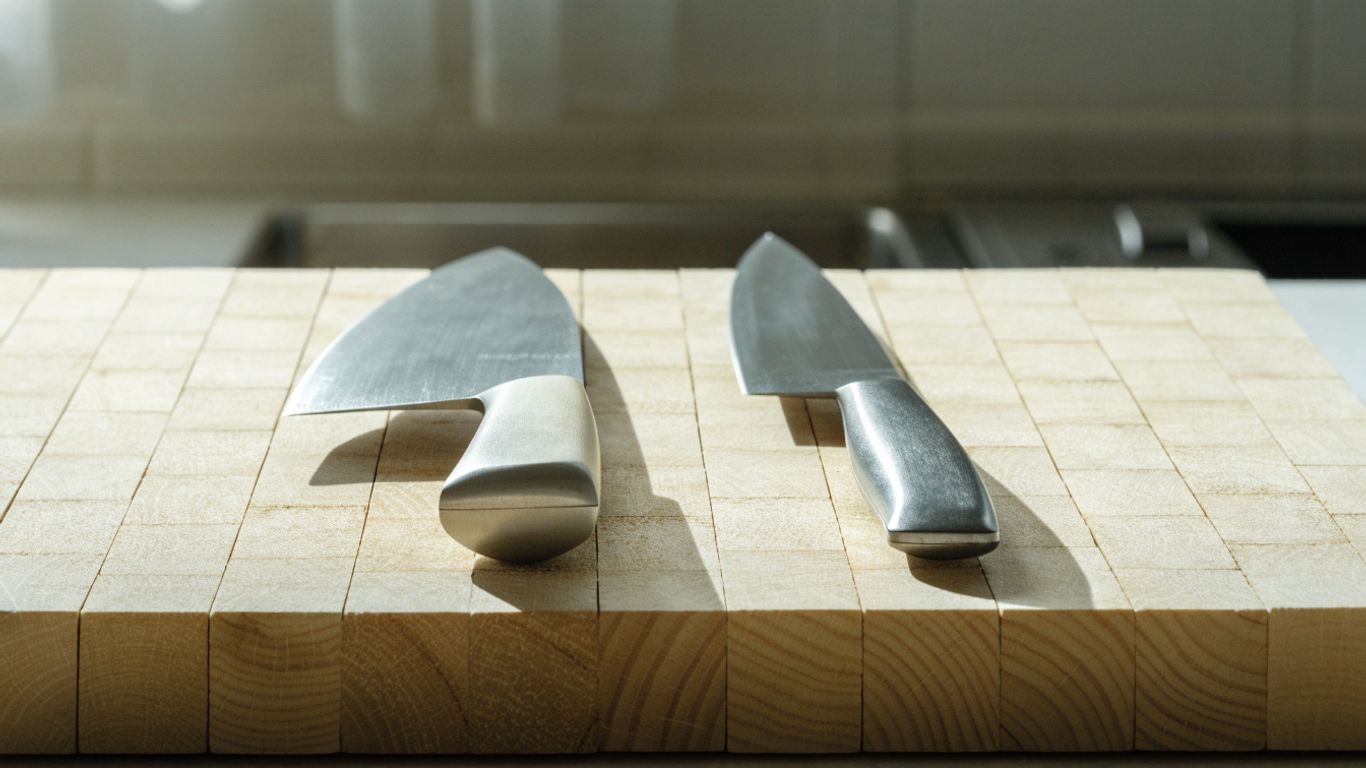
What forged and stamped mean
The short answer: forged knives are shaped from heated steel, while stamped knives are cut from a sheet. Either method can produce a useful kitchen knife; the design, steel, heat treatment, and fit in your hand matter just as much. If you are comparing German knives, think of construction as one clue rather than a verdict.
How forging shapes a knife blade
For a forged blade, steel is heated and shaped under pressure, then finished into a blade. The process can form a thicker heel or bolster as part of the knife, though the details vary by maker and model. Forging describes how the blade is made, not a promise that it will cut or last better than every stamped knife.
How stamping cuts a blade from sheet steel
A stamped blade is cut from a sheet of steel, then ground and finished to its intended shape. That method can make it possible to produce a thinner, lighter profile, but it does not mean every stamped knife is flimsy or poorly made. The final steel and manufacturing choices still count.
What the bolster and full tang do—and don’t—tell you
A bolster is a thicker transition near the handle; it may add weight and change how the knife balances. A full tang means the blade steel extends through the handle, but tang construction alone does not tell you whether the edge is well formed or the knife suits your grip. Look at these features alongside the whole knife, not as a quality score.
Why construction alone doesn’t determine quality
The broad differences are useful, but there are exceptions within both categories. This comparison is a starting point, not a ranking: the same construction label can cover knives with different blade thicknesses, balance, and edge geometry. A quick overview helps separate tendencies from guarantees.
| Feature | Forged, often | Stamped, often |
|---|---|---|
| Blade formation | Shaped from heated steel | Cut from a steel sheet |
| Weight and feel | May feel heavier or more substantial | May feel lighter and more nimble |
| Bolster | May have a pronounced bolster | May have a smaller bolster or none |
| What to assess | Balance, edge, steel, and handle | Balance, edge, steel, and handle |
The words “often” and “may” matter: individual knives do not always follow the pattern. For a closer look at how construction, steel, blade shape, grip, and price compare across German options, see this Wüsthof and Zwilling comparison.
Forged vs stamped knives in everyday handling
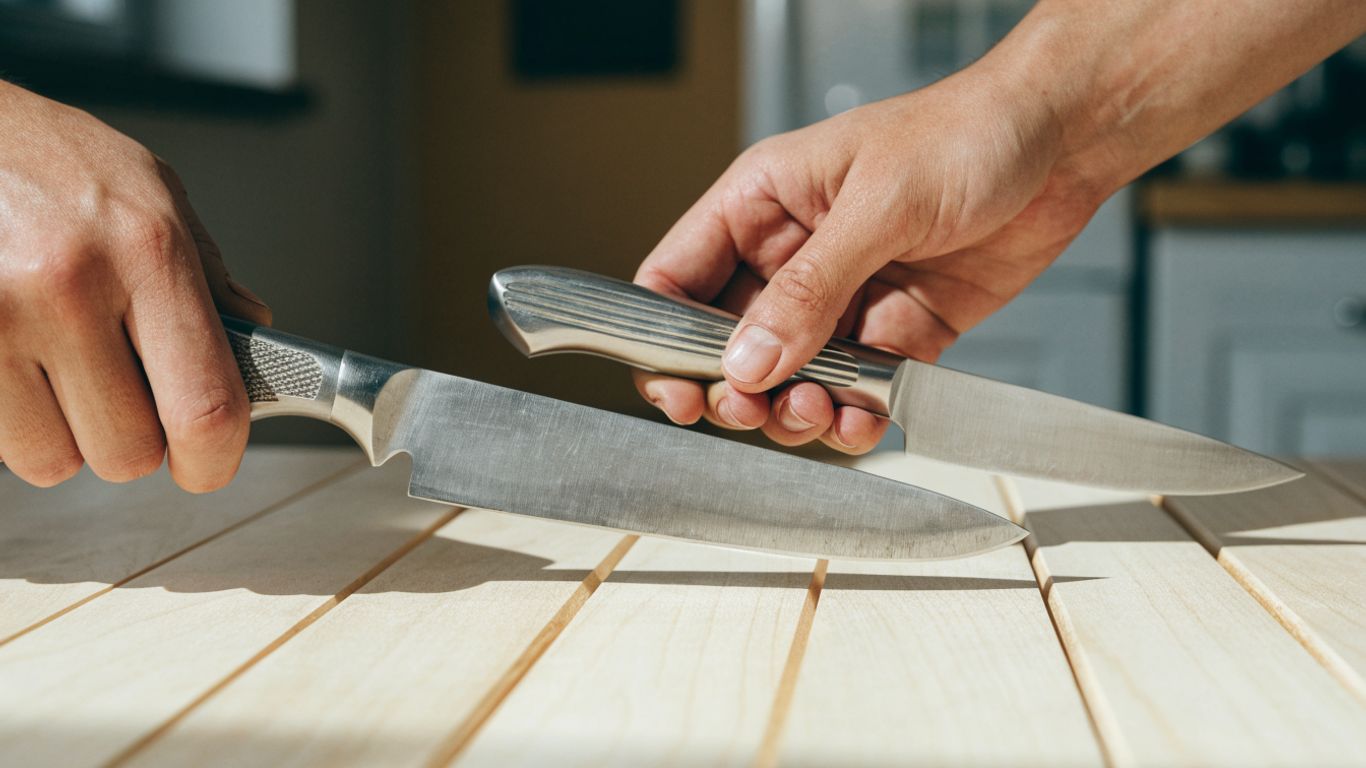
In daily prep, forged vs stamped knives can feel different because weight, thickness, and balance affect how the blade moves through food. Neither style is automatically easier to use; the right fit depends on your hand and the kind of prep you do. Notice how the knife feels through several ordinary cuts, not just when you lift it.
How weight and balance affect repetitive prep
A heavier knife may let its weight contribute to a downward cut, but it can also feel tiring during a long session. A lighter knife asks for less effort to lift and redirect, though some cooks prefer a little more heft. Balance is personal: the knife should feel steady without making you compensate at the wrist.
How blade thickness changes the feel of a cut
Thickness behind the edge can affect how a blade moves through firm ingredients. A thicker blade may feel sturdy but can push food apart more; a thinner profile may pass through with less resistance. The forged or stamped label does not tell you the exact thickness, so check the individual model’s specifications when available.
When a lighter knife can be easier to control
If your prep involves quick, small cuts or frequent changes of direction, a lighter knife may feel more responsive. That can be useful when you want to guide the tip carefully rather than rely on the knife’s weight. A lighter feel is not automatically more precise, though; the handle and blade shape still need to suit your grip.
Why grip and handle fit matter as much as blade style
A handle that feels secure lets you guide the blade without squeezing hard. Before buying, consider these practical checks, ideally with the knife in hand:
- Does the handle sit comfortably in your usual grip?
- Can you guide the tip without your wrist feeling strained?
- Does the knife feel balanced when you hold it near the handle?
- Can you maintain a relaxed grip through repeated cuts?
These small checks often reveal more than a construction label. If you cannot handle a knife before buying, compare its dimensions and return terms, then be ready to reassess if the fit feels wrong at home.
How construction affects cutting performance
Construction affects a knife’s overall feel, but cutting performance depends on several parts working together. Blade geometry, edge condition, steel, and heat treatment all influence how a knife moves through food and how long it stays sharp. Forging or stamping alone cannot predict the result.
How blade geometry influences slicing and chopping
Geometry includes the blade’s thickness and the way it tapers toward the edge. A thinner profile can move through ingredients with less wedging, while a sturdier profile may feel more substantial in heavier chopping. For home prep, choose a shape that matches your usual cuts rather than assuming one construction method has a universal advantage.
Why sharpness depends on the edge, not the manufacturing method
A knife cuts cleanly when its edge is appropriately sharp and shaped. A forged knife that has dulled can feel less effective than a well-maintained stamped knife, and vice versa. The edge does the cutting; the manufacturing method describes how the blade began, not its present condition.
How steel type and heat treatment affect edge retention
Steel composition and heat treatment influence how an edge behaves over time, including how well it resists wear. Two knives made by different methods may use steels or treatments that perform differently, so compare the model’s published details rather than inferring edge life from “forged” or “stamped.” If a maker does not publish those details, avoid treating a guess as a specification.
What to expect with dense foods, delicate cuts, and long prep sessions
For dense ingredients, a blade that feels stable and moves cleanly through the cut is more useful than a label. Delicate cuts tend to reward control and a suitable edge, while longer sessions put more emphasis on comfort and weight. Match the knife to the work you actually do; no construction style guarantees the same feel for every cook.
Sharpening, care, and durability
Both forged and stamped knives need routine edge maintenance and sensible care. Construction may affect access to the heel or the way the knife feels during maintenance, but it does not determine how often your particular knife needs attention. Use changes in cutting feel as a cue rather than relying on a fixed schedule for every blade.
How often each type needs sharpening
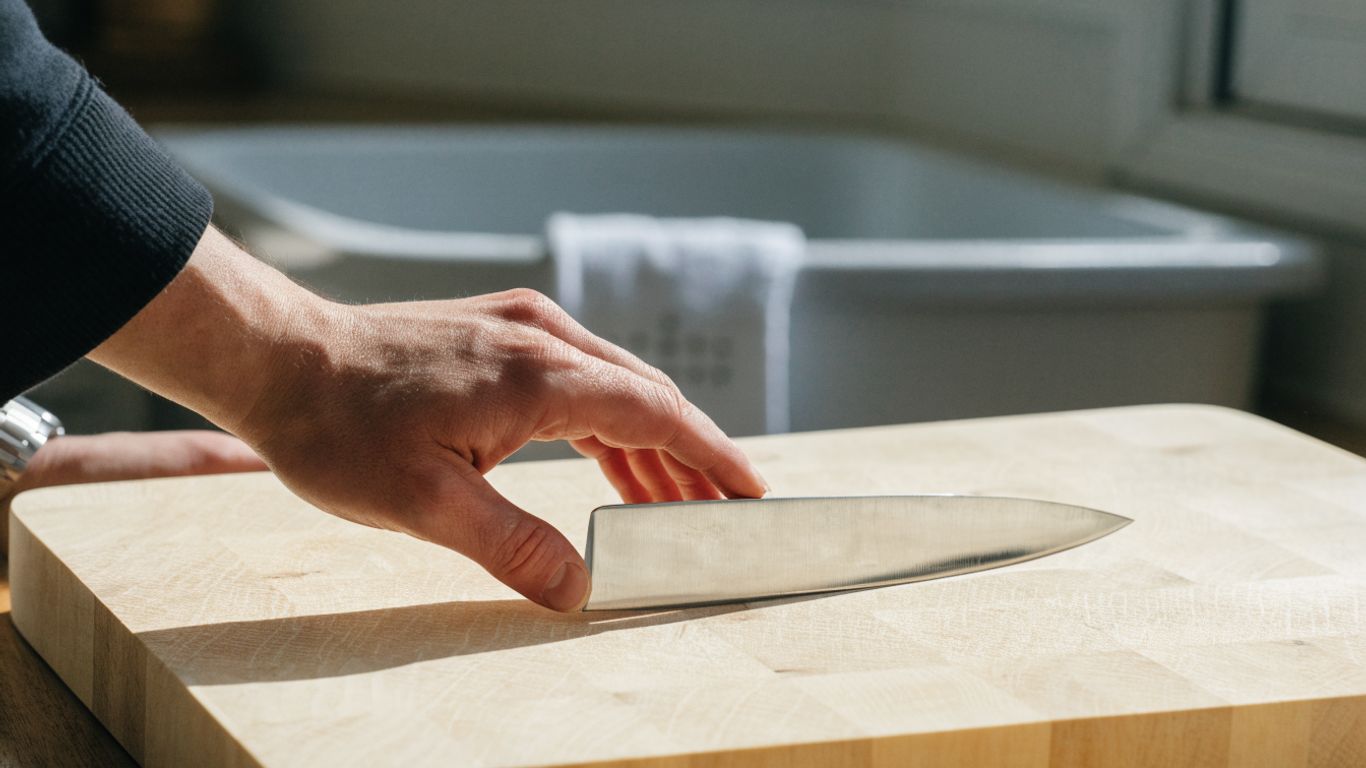
There is no dependable schedule based only on whether a knife is forged or stamped. How often you use it, what you cut, and the condition of its edge all affect when it needs sharpening. If it begins to slip or requires noticeably more effort, check the edge and follow the maker’s care guidance.
What makes a knife easier or harder to sharpen
The steel, edge geometry, and damage to the edge can influence how straightforward sharpening is. A construction label does not provide enough information to predict the effort involved. Before buying, look for the maker’s maintenance guidance and consider whether you are comfortable with the care the knife requires.
How bolsters can affect honing and edge maintenance
A bolster that reaches the heel may make it harder to access the full length of the edge during maintenance. Other designs leave the heel more open. Check the bolster’s shape against the edge rather than assuming every forged knife has the same design or every stamped knife lacks one.
Why proper care matters more than forged or stamped construction
Care has a direct effect on how a knife holds up in ordinary use. Follow the maker’s instructions, clean and dry the knife after use, and avoid treating a construction label as a substitute for basic maintenance. A well-cared-for knife of either type can remain useful for years, though wear and service needs vary by model and use.
Price and value over time
Forged knives often cost more, but price alone does not show whether a knife is a good fit or a sound value. Compare the blade, handle, balance, published steel details, and care requirements alongside the purchase price. The goal is a knife you will use comfortably, not the most expensive construction method.
Why forged knives often cost more
Forging involves shaping and finishing steel, and some forged designs include more substantial bolsters or additional finishing steps. Those choices can contribute to a higher price, but prices vary across makers and models. A premium is worth considering only if the knife’s weight, balance, and features suit your needs.
When a stamped knife offers better value
A stamped knife can be a sensible choice when you want a lighter blade or are setting a practical budget. Lower price does not automatically mean poor performance, just as a higher price does not guarantee the right fit. Compare the actual knife and its published details before deciding what the savings mean to you.
How to compare knives beyond their price tags
Compare models using the same criteria, so a difference in price has some context. Check the specifications and warranty terms the maker publishes, and give comfort a real place in the decision. A few details can clarify what you are paying for:
- Blade length, shape, and thickness, when listed
- Steel and heat-treatment information, when published
- Handle fit, bolster design, and overall balance
- Care guidance, warranty terms, and return policy
Not every maker publishes every detail, so do not fill gaps with assumptions. If the knife feels awkward or its care expectations do not suit you, a lower price may not make it a better long-term choice.
Which construction makes sense for a starter or backup knife
For a starter knife, prioritize a comfortable, versatile shape and an edge you can maintain. A lighter stamped knife may be easier to maneuver, while a forged knife may suit you if you prefer more weight and a bolster. For a backup, consider the jobs it will handle and whether it adds a genuinely useful feel or size to what you already own.
How to choose the right knife for your kitchen
Choose based on the work you do, the way you hold a knife, and the individual model’s details. Forged and stamped are useful descriptions, but neither is a shortcut to knowing whether a knife will feel right. A measured comparison is more helpful than buying by reputation alone.
Match knife weight to your cooking habits
If you cook often and do long stretches of chopping, pay close attention to how the knife’s weight feels after repeated lifts. If your tasks are mostly small or precise, a lighter blade may feel easier to redirect. Neither preference is a flaw; it is simply part of matching the tool to your routine.
Consider your preferred cutting style and grip
Think about whether you tend to guide cuts with the tip, use a rocking motion, or make mostly straight downward cuts. The blade shape and handle should feel comfortable with your natural grip. When comparing German options such as Henckels or Messermeister, assess the specific knife rather than assuming a brand or construction label guarantees a particular feel.
Compare the actual blade steel, shape, and handle
Look for clear model-level information, not just a broad category name. Blade shape and length determine what jobs feel natural, while steel and heat treatment help set expectations for edge maintenance. If information is missing, treat that as an unknown instead of assuming the knife shares specifications with another model.
Choose based on comfort and performance, not the label
For a budget-conscious first purchase, favor a knife that fits your hand and has clear care guidance. For frequent prep, weigh comfort over time as heavily as the initial feel. For a lighter, nimble option, compare stamped models; for a more substantial feel, try forged models, then choose the one you can control with ease.
Frequently Asked Questions
Are forged knives always better than stamped knives?
No. The method alone does not establish quality or cutting performance. Compare the steel, heat treatment, blade geometry, edge, and handle on the individual knife.
Are stamped knives less durable?
Not necessarily. Durability depends on the knife’s materials, construction details, and care, not just whether the blade was stamped. Check the maker’s specifications and warranty for the model you are considering.
Do forged knives always have a bolster?
No. A bolster is common on some forged designs, but designs vary. Look at the individual knife to see whether the bolster is present and how it meets the edge.
Are stamped knives easier to control?
A lighter stamped knife may feel easier to move for some cooks, but control also depends on balance, blade shape, and handle fit. Your own grip and cutting style matter.
Which type stays sharp longer?
There is no universal answer based on construction alone. Steel, heat treatment, edge geometry, use, and maintenance all affect edge retention.
Do forged knives cost more?
They often do, but prices vary widely by model and maker. Compare the knife’s features and fit rather than assuming a higher price guarantees better value.
What should you check before buying either type?
Review the blade shape and length, steel details, handle comfort, balance, care guidance, and return terms. If possible, handle the knife and make a few controlled motions before deciding.
How this guide was put together
The Maple Board Guide team writes and fact-checks every guide on Maple Board Guide. Comparisons are based on maker specifications, published standards and food-safety guidance from sources such as the USDA, and each guide is reviewed and updated when specs or prices change. More about us.