MAPLE BOARDS
How to Segment Citrus on a Cutting Board
Learn how to segment citrus on a cutting board with steady trimming, clean membrane cuts, and juice-saving tips.
The short answer
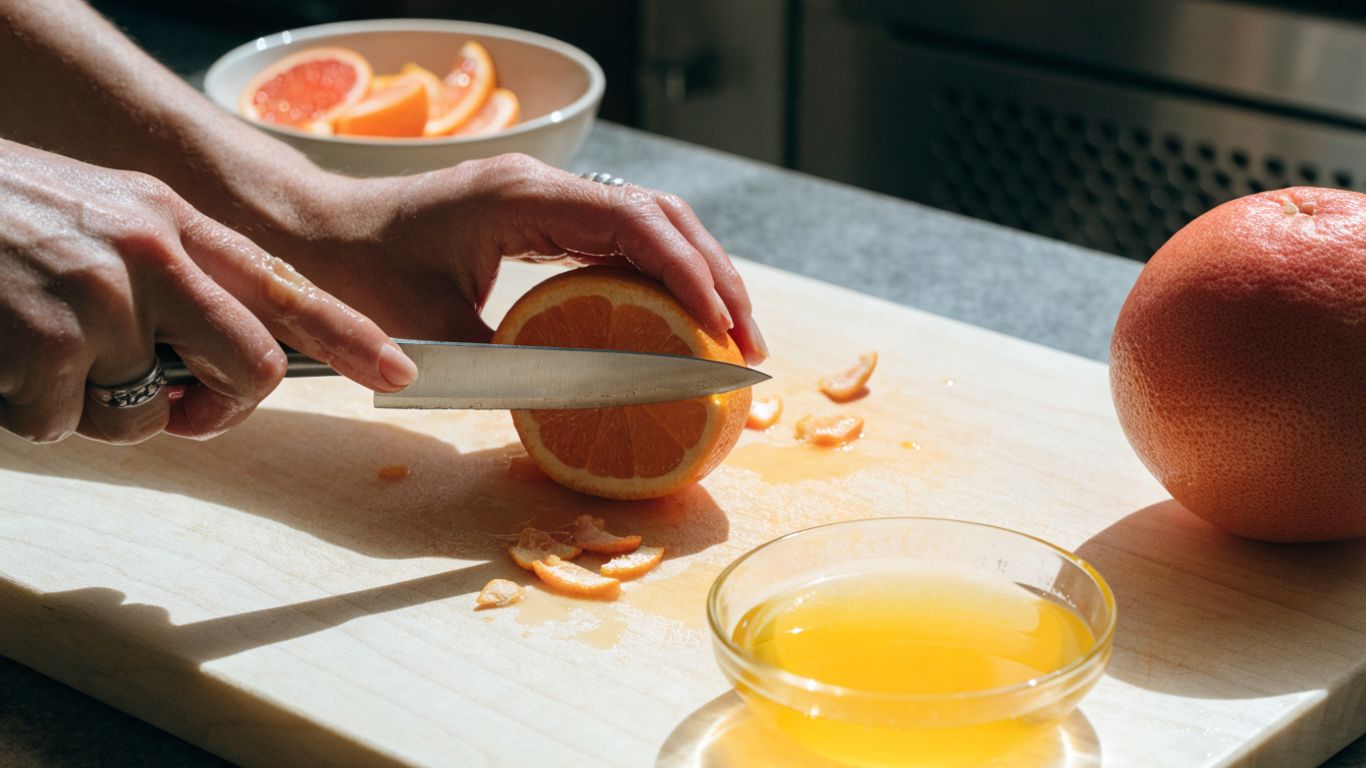
To segment citrus on a cutting board, trim away the ends and peel, then cut beside each membrane to free the fruit. Work with a sharp knife and a stable board, and save the juice left in the core.
- Set up a sharp paring knife, a clean board, and a steady work surface.
- Trim both ends so the fruit can stand upright.
- Remove the peel and as much white pith as practical.
- Cut along the membranes to release each segment.
- Save the core juice and refrigerate the segments in a covered container.
Gather the right tools and prepare the fruit
You need a sharp knife, a stable cutting board, and clean, dry citrus to begin. A paring knife gives you control around the small curves and membranes, though a small sharp utility knife can also work. Keep a bowl nearby if you want to collect juice as you cut. For more citrus-prep ideas, see this guide to cocktail garnish prep.
Choose a sharp paring knife for precise cuts
A sharp paring knife is a practical choice because its short blade lets you work close to the peel and membranes without taking large bites of fruit. A dull edge tends to crush the flesh and can make the knife slip, so sharpen or replace it before you start. The Bevel & Bond End-Grain Maple Cutting Board has non-slip feet, a useful feature when you need the board to stay put during close knife work.
The blade choice affects how easy the cuts feel. Here is a quick comparison of common options for this task:
| Knife | Where it helps | Trade-off |
|---|---|---|
| Paring knife | Precise cuts around individual membranes | Short blade means more strokes |
| Small utility knife | Peeling and segmenting medium or large fruit | A longer blade can feel less nimble |
| Chef’s knife | Trimming the ends of larger citrus | Less control for the small membrane cuts |
Choose the knife you can guide comfortably, and keep your fingertips curled away from the edge. The goal is a clean cut, not a dramatic one.
Keep the cutting board from sliding
Put a damp, wrung-out kitchen towel beneath the board before you begin. It should grip the counter without leaving standing water under the board. If the board still shifts, stop and adjust it rather than trying to steady it with your free hand while cutting. A Bevel & Bond End-Grain Maple Cutting Board measures 17 by 13 inches and has non-slip feet, according to its product specifications.
Wash and dry the citrus before cutting
Rinse the whole fruit under running water and dry it with a clean towel. Dry skin is easier to hold, and the towel removes water that could make your fingers slick. Wash the fruit before peeling so the knife does not carry surface residue from the rind onto the cut flesh.
Trim the fruit so it sits securely
Cutting off a small slice at both ends gives the citrus a level base and makes it easier to remove the peel. Keep the cuts modest: you want to expose the flesh without losing much of it. Once the fruit stands securely, you can work down its sides with the knife moving away from your hand.
Slice off the stem and blossom ends
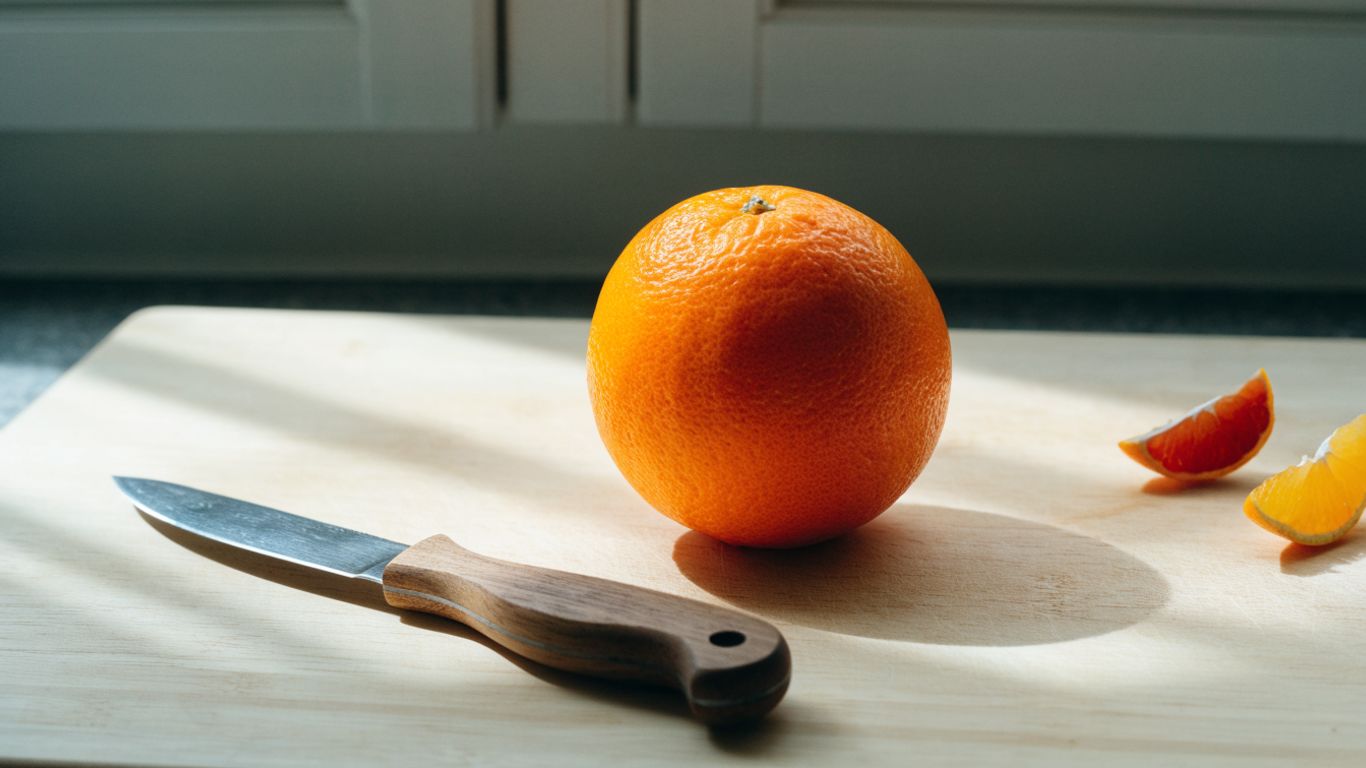
Place the fruit on its side and slice off the stem end, then the blossom end. Make each cut just deep enough to expose the fruit beneath the rind; the exact amount varies with the shape and thickness of the peel. A level cut matters more than a perfectly round one, since it gives you a safe base for the next step.
Stand the fruit upright on a flat end
Set the citrus on one of the trimmed ends and check that it does not rock. If it tips, shave a thin sliver from the base until it rests steadily. Hold the fruit gently near the top, keeping your fingers above the path of the blade. A stable stance makes it easier to follow the curve instead of cutting straight down and wasting flesh.
Adjust the cut for small or uneven citrus
Small mandarins and irregular fruit may need only a narrow trim to sit securely. With a large grapefruit, a slightly wider flat end can make peeling more manageable, but avoid cutting so much that you remove a thick cap of flesh. The Bevel & Bond End-Grain Maple Cutting Board includes a juice groove; it also gives you a defined working area while you trim larger, juicier fruit.
Remove the peel and pith
Once the fruit is upright, remove the rind in a series of controlled downward cuts. Aim to take off the colored skin and most of the white pith while keeping the curve of the fruit intact. The white layer can taste bitter, so a little careful trimming now makes the finished segments more pleasant.
Cut the rind away in strips from top to bottom
Start at the top edge and guide the knife down toward the board, following the fruit’s side. Turn the fruit a little and repeat, overlapping each cut until the rind is removed. A few narrow strips are easier to control than one oversized cut, especially where the fruit narrows at either end.
For a steady rhythm, think of the peel as a series of small passes rather than one continuous spiral. Use this sequence:
- Set the blade just inside the edge of the rind.
- Cut downward with the curve of the fruit.
- Rotate the citrus slightly and repeat.
- Inspect the surface and shave off visible pith.
This method leaves room to correct a cut as you go. If a strip takes too much flesh with it, reduce the depth on the next pass.
Follow the fruit’s curve to save more flesh
Keep the blade close to the surface and angle it inward where the citrus bulges, then ease it outward near the ends. Short, steady, shallow cuts usually remove less flesh than pushing the knife straight down. Take your time around uneven spots; a slightly slower peel is better than a tidy pile of discarded orange.
Trim away any remaining bitter white pith
After peeling, turn the fruit in your hand or set it down and inspect it from all sides. Use the knife to skim off noticeable patches of white pith without digging into the flesh. It is fine if a small trace remains, but thick strips can be bitter and may make the segments harder to separate cleanly.
Cut clean segments between the membranes
The membranes form the thin walls between citrus sections. Cut on either side of each wall so the segment comes away without its tough covering. Work slowly at first; after a few sections, the angle becomes easier to see.
Hold the peeled fruit over the board or a bowl
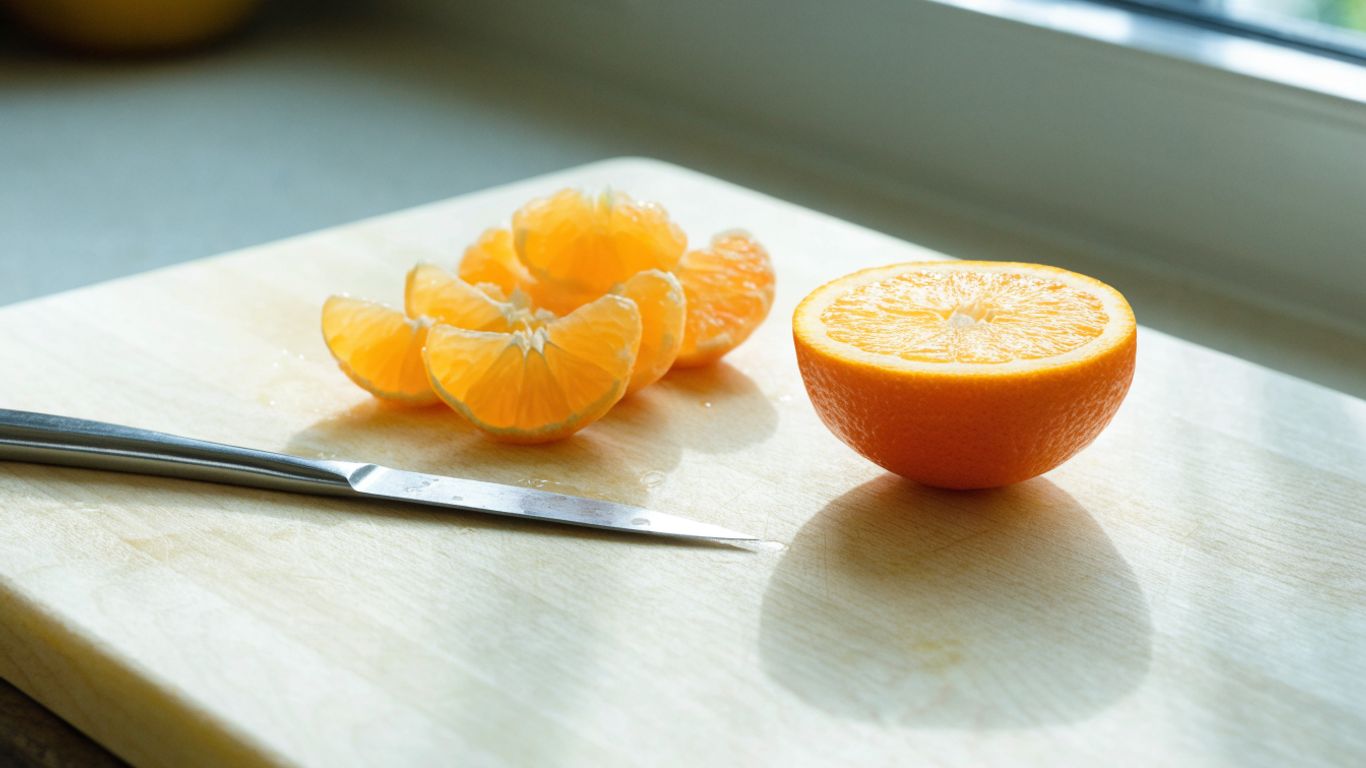
If you are comfortable holding the fruit, cup it in your non-cutting hand over a bowl so the juice and segments fall into it. Keep your fingertips tucked away from the blade. If holding the fruit feels awkward, rest it on the board with a broad side down and turn it as needed. A BBC guide to segmenting citrus shows the same basic approach of removing the peel and cutting between the membranes.
Slice along one membrane toward the center
Find a membrane and insert the knife just beside it, cutting toward the center of the fruit. Stop when you reach the middle rather than slicing through the far side. Keep the blade close to the membrane so the segment stays intact and little flesh is left behind.
Repeat on the other side to release each segment
Angle the knife along the neighboring membrane and cut back toward the center. The two cuts should meet, releasing one clean segment. Turn the fruit and repeat around it, adjusting your grip whenever it becomes slippery. For another visual reference, this citrus-segmenting guide explains the peel, pith, and membrane work in a step-by-step format.
If a segment resists, do not tug hard; check whether a membrane is still attached and make a small finishing cut. That keeps the pieces neat and avoids crushing the fruit.
Handle the core, membranes, and juice
The center and membranes still hold juice after the segments are removed. Save it for a dressing, a drink, or a spoonful over the finished dish. Keep your board and knife under control as the juice spreads, since citrus can make the work surface slick.
Squeeze the leftover core for juice
Hold the remaining core over a bowl and squeeze gently. If seeds drop out, remove them before using the juice. The Bevel & Bond End-Grain Maple Cutting Board has a juice groove; when you work on a board with one, keep the fruit and juice within its boundaries where possible. Do not rely on the groove as a substitute for wiping up spills.
Use the knife tip to remove stubborn seeds
Check each released segment for seeds before serving. Lift a seed with the knife tip or use clean fingers, taking care not to slice into your palm. If you find several seeds in a section, set it on the board before removing them instead of balancing it in your hand.
Wipe the board when juice makes it slippery
Pause if juice pools beneath the fruit or spreads toward the board’s edge. Move the citrus to a bowl, wipe the board with a clean towel, and make sure the work surface is stable before continuing. A quick reset is safer than trying to cut through a slick patch.
Store and use the segments
Put the segments in a clean, covered container and refrigerate them if you are not serving them right away. Their delicate flesh is best when it has not been sitting exposed to air for long. Freshly cut citrus can brighten a simple salad, dessert, or savory plate without much extra preparation.
Refrigerate segments in a covered container
Transfer the segments with a clean spoon or your fingers, and add a little collected juice if you want to keep them moist. Cover the container and place it in the refrigerator. Keep the pieces chilled until you are ready to serve, and use clean utensils when taking portions out.
Add them to salads, desserts, or savory dishes
Fold segments into leafy salads, spoon them over yogurt or cake, or serve them alongside roasted vegetables or fish. Their juice can also go into a dressing, so taste before adding extra acid. For a chopped topping, cut the segments just before serving to preserve their shape.
Use them soon for the freshest texture and flavor
The segments are most appealing soon after cutting, when the flesh is plump and the membrane-free edges are still neat. If you have more than you need, refrigerate the extra promptly rather than leaving it on the counter. Let the fruit guide the timing: soft or leaking pieces are better used in a dressing than arranged on top of a dish.
What to remember when you segment citrus on a cutting board
A sharp paring knife, a stable board, and a few patient cuts are all you need to segment citrus neatly. Trim the ends, follow the fruit’s curve as you peel, and cut beside each membrane; then save the core juice and chill the finished pieces until serving.
Frequently Asked Questions
What does it mean to segment citrus?
Segmenting citrus means removing the peel and pith, then cutting the flesh away from the membranes that divide the fruit. The result is tender pieces without the tougher outer coverings.
Which knife should you use to segment citrus?
A sharp paring knife is a useful choice because its short blade offers control around the membranes. A small, sharp utility knife can work too, especially on larger fruit.
Should you cut citrus over a bowl?
A bowl catches juice and released segments if you hold the fruit above it. If you prefer to keep the fruit on the board, work slowly and collect the juice afterward.
How much of the ends should you cut off?
Trim just enough from each end to expose the flesh and create a stable flat base. The amount depends on the fruit’s size and the thickness of its rind.
How do you remove bitter pith?
After cutting away the peel, inspect the fruit and skim off thick patches of white pith with the knife. Keep the blade shallow so you remove as little flesh as possible.
What can you do with the leftover citrus core?
Squeeze it over a bowl to collect its juice, then remove any seeds. Use the juice in a dressing, drink, or other dish that can benefit from fresh citrus.
How should you store segmented citrus?
Place the pieces in a clean, covered container and refrigerate them. Use them soon for the best texture, and keep them chilled until serving.