MAPLE BOARDS
How to cut brownies into clean squares: a simple step-by-step guide
Learn how to cut brownies into clean squares with cooling, knife, and slicing tips for neat, even pieces.
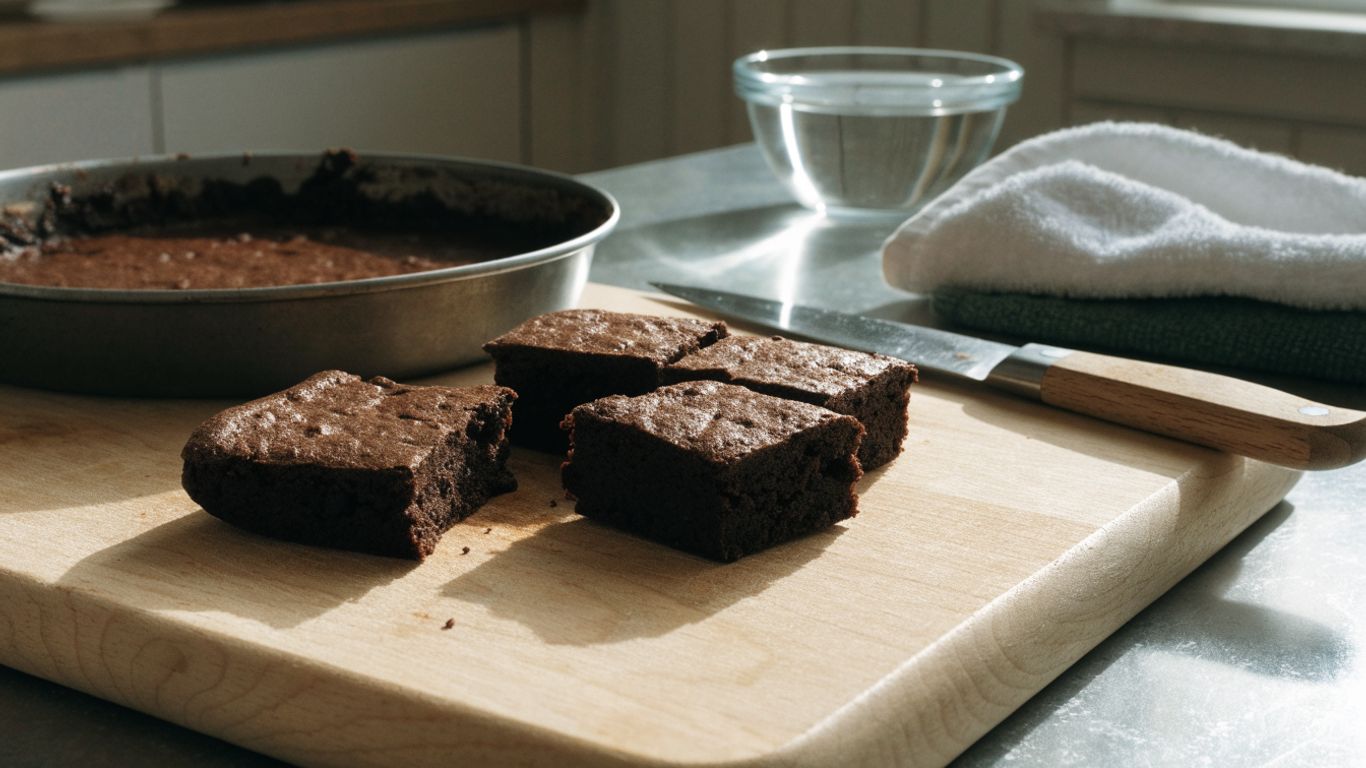
The short answer
For how to cut brownies into clean squares, let the slab cool completely, then use a clean, warm, dry knife and plan your grid before slicing. A little patience keeps the center from smearing and the edges from collecting crumbs.
- Cool brownies fully before cutting; chill very fudgy batches if needed.
- Choose a long, sharp knife and clean it between cuts.
- Mark equal rows first so the pieces stay consistent.
- Press the blade straight down instead of sawing.
- Lift the squares gently and cover leftovers to keep them from drying.
Let the brownies cool and set
Brownies cut most neatly once they have cooled and their centers have set. Give the pan time at room temperature before you reach for a knife; warmth makes the middle soft and the edges prone to tearing. The trade-off is a longer wait for that first piece, but the remaining squares will hold their shape better.
Cool them fully in the pan
Set the pan on a heat-safe rack and leave the brownies undisturbed until they reach room temperature. The pan’s residual heat continues to soften the base, so taking them out while hot can leave the center fragile. Once cool, the slab is easier to handle and less likely to crumble at the edges.
Chill the pan for especially fudgy brownies
If the brownies are very dense and still feel tacky after cooling, cover the pan and refrigerate it for about 20 to 30 minutes. The brief chill firms the chocolate and butter, making the slab easier to cut without turning it hard. Let the pieces sit out after slicing if you prefer a softer bite.
Know when brownies are ready to cut
Look for a surface that feels set and a center that no longer gives under a very gentle touch. If you are unsure, make a small test cut along an edge before committing to the whole pan. These signs help you distinguish a sliceable brownie from one that is still warm inside.
| What you notice | What it suggests | Next move |
|---|---|---|
| Center feels soft and warm | The crumb may smear | Wait longer |
| Surface and center feel set | The slab is likely ready | Test an edge cut |
| Fudgy center clings to the blade | It may need more firmness | Chill briefly |
A clean test cut is more useful than watching the clock alone, since pan size and brownie thickness vary. If the edge holds together, you can proceed; if it drags or collapses, give the slab more time.
Avoid cutting warm brownies too soon
Cutting while the brownies are warm often pulls the soft center into the blade and breaks the corners away. If you need to serve them warm, accept that the pieces may be less tidy, or cut just a small portion and leave the rest intact. For neater squares, waiting is the simplest fix.
Choose the right tools
A long, sharp chef’s knife is usually enough for tidy brownie squares. Set it beside a mug or bowl of hot water and a towel before you begin, so you can clean the blade without stopping to search for supplies. A calm, uncluttered setup helps; this organized prep space guide offers a useful approach to arranging tools within reach.
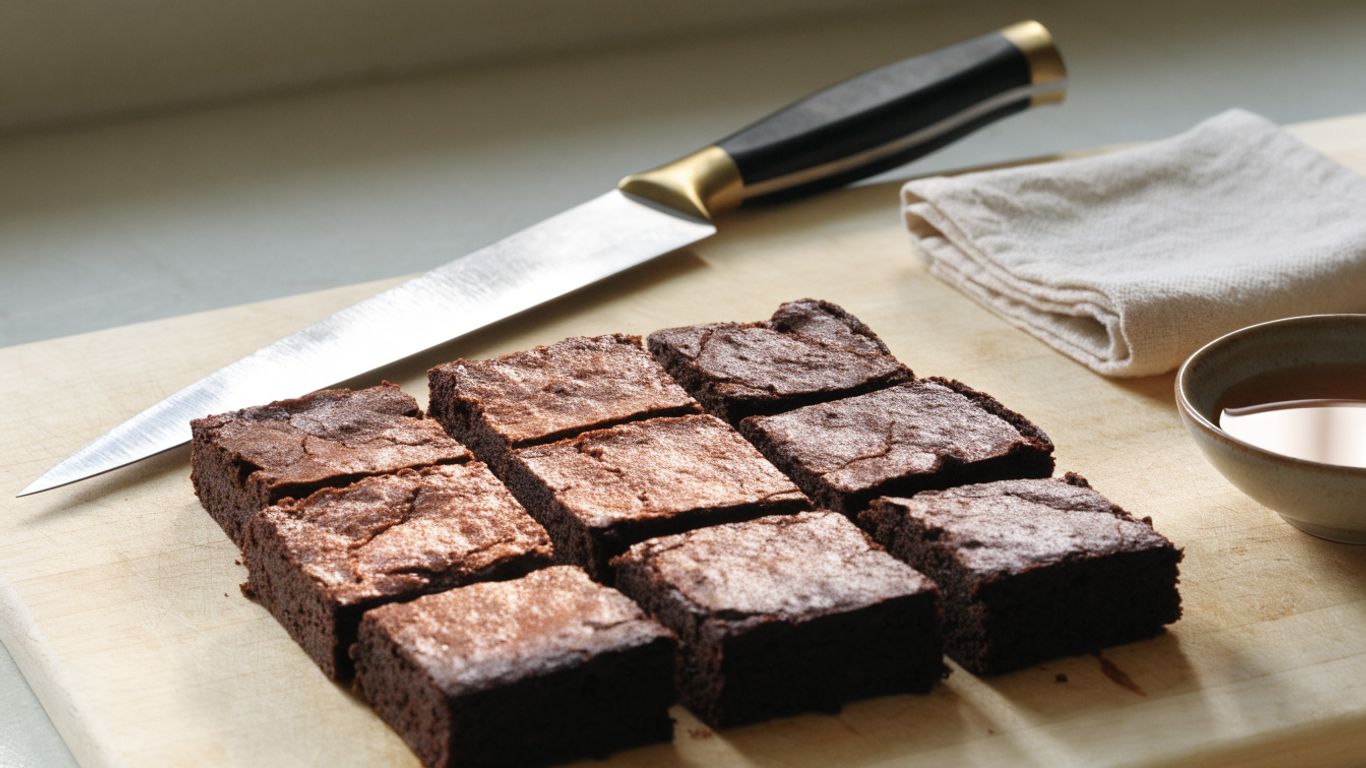
Use a long, sharp chef’s knife
Choose a blade long enough to cross the pan in one pass, with a sharp edge that does not need much force. A chef’s knife gives you control over the cut and avoids repeatedly dragging a short blade through the same line. Keep your free hand away from the blade’s path as you steady the brownie slab or pan.
When a plastic knife or bench scraper may help
A plastic knife can release sticky brownie from its sides as you cut, while a bench scraper can make straight, downward cuts through a broad slab. Neither tool is essential, and a dull edge on any tool can crush the top instead of slicing cleanly. Pick the one that feels stable in your hand and fits the thickness of your brownies.
Set out a damp towel and hot water
A bowl of hot water and a damp towel make it easier to clear melted chocolate and crumbs from the blade between slices. Dip the knife briefly, wipe it clean, then dry it before returning to the brownies. The blade should be warm, not dripping; extra water on the surface can make the cut messy.
Skip serrated knives for cleaner edges
A serrated blade can catch on a crisp top and pull crumbs through a soft center. A smooth, sharp edge is easier to guide straight down, especially when you wipe it between cuts. If a serrated knife is all you have, use light pressure and avoid a back-and-forth sawing motion.
Plan even squares before cutting
Decide how many rows and columns you want before the knife touches the brownies. A quick plan prevents a row of generous pieces followed by a few little leftovers at the far edge. For other careful knife work, the guide to cutting watermelon into cubes follows the same useful principle: choose the size before you start slicing.
Lift brownies from the pan when the recipe allows
If the recipe and pan preparation allow it, lift the cooled slab out before cutting. Set it on a stable, clean surface or cutting board with enough room for the knife to pass through without hitting the counter. If the brownies resist, do not force them; slicing in the pan is safer than tearing the slab during removal.
Use parchment overhang to make removal easier
Parchment extending over two opposite sides gives you a simple way to lift the cooled brownies. Hold both overhangs and raise the slab evenly, supporting the bottom as you move it. If the paper sticks or folds under the brownies, ease it loose rather than pulling hard on one corner.
Mark equal rows before making full cuts
Before making complete cuts, use the knife tip to mark the edges where each line should fall. This gives you a visual guide and makes it easier to keep the rows evenly spaced. A simple sequence helps when you are setting up the grid:
- Measure or estimate the slab’s width and length.
- Choose the number of pieces in each direction.
- Mark matching intervals along opposite edges.
- Line up the marks before cutting each row.
Once the marks match, make full cuts from one side to the other. Even small adjustments before slicing are easier than trying to correct a crooked row afterward.
Adjust the grid to match the pan size
A square pan often divides neatly into equal rows and columns, while a rectangular pan may suit more pieces along its longer side. Use the brownie slab’s actual dimensions rather than assuming every pan is the same size. Larger squares feel generous; smaller ones are easier to serve to a group.
Cut brownies with clean, steady strokes
Once the slab is cool and the grid is marked, make each cut with a deliberate downward motion. Keep the blade clean and dry, and avoid dragging it across the top. These small habits keep crumbs from collecting on the cut faces and help each piece keep its shape.
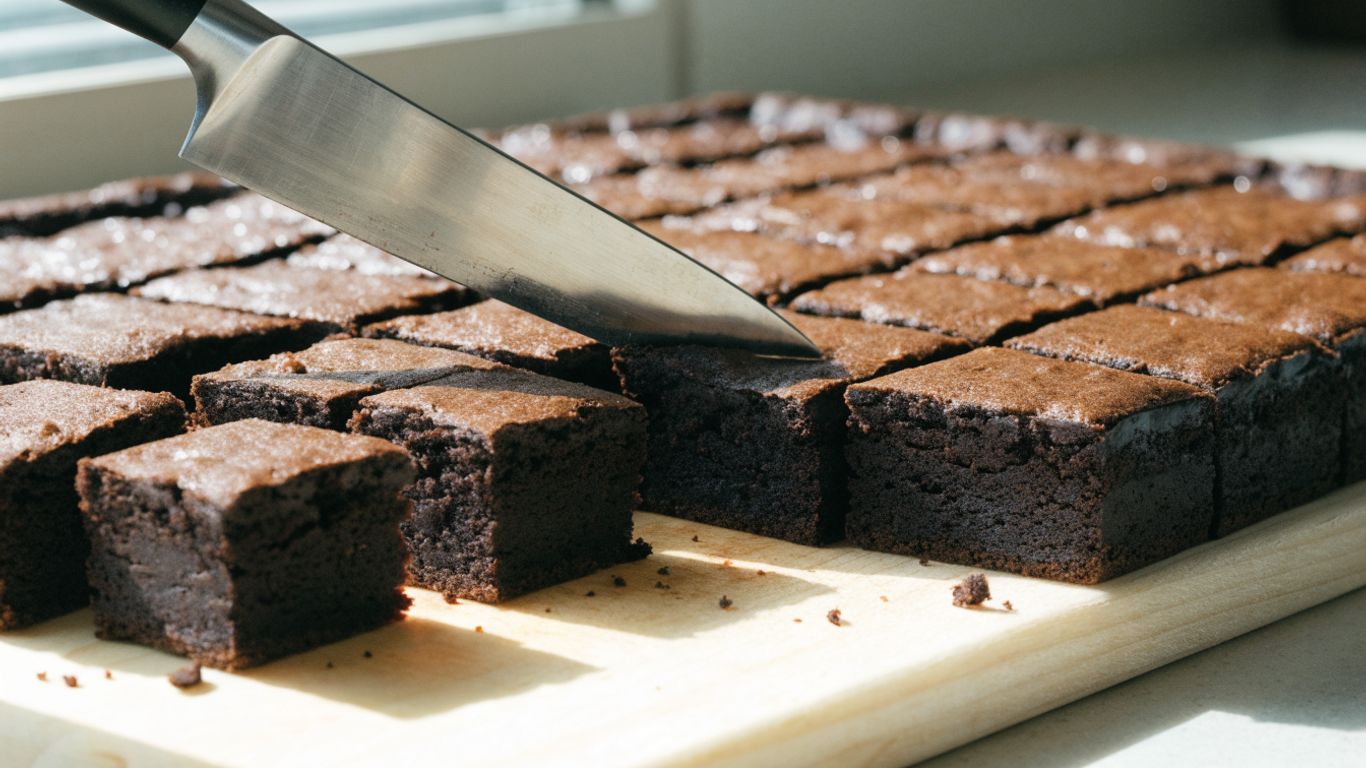
Warm and dry the blade between cuts
Dip the blade in hot water for a few seconds, wipe it clean, and dry it before each new cut. The warmth helps the knife pass through sticky chocolate, while a dry blade avoids leaving water streaks on the brownie surface. For another take on clean brownie slices, focus on the same practical combination: a sharp knife, hot water, and a towel.
Press straight down instead of sawing
Place the blade on your marked line and press down in one controlled motion. Sawing can tear the top and push soft filling or crumbs across the cut. If the blade does not pass through in one stroke, apply steady pressure rather than moving it rapidly back and forth.
Wipe away crumbs and batter after each slice
A quick wipe between cuts keeps loose crumbs and sticky chocolate from transferring to the next edge. Clean both sides of the blade, then warm and dry it again if the brownies are clinging. The extra few seconds are worthwhile when you want the rows to look consistent.
Cut across the middle first to keep rows even
For a large slab, make the first long cut through the center, then work outward toward the marked edges. The center line creates two manageable halves and gives you a reference point for keeping the remaining cuts parallel. If you have made a grid, follow its marks rather than trying to eyeball each line as you go.
This cutting sequence is especially helpful when the slab is wider than the knife. Keep your wrist steady and reposition yourself if needed, rather than stretching across the pan and losing control of the blade.
Handle sticky or delicate brownies
Different textures call for small adjustments, not a completely different method. Fudgy brownies benefit from a short chill, while cakey ones need time to cool so the crumb can settle. Keep the blade clean and change one variable at a time if a test cut looks rough.
Keep very fudgy brownies cold while slicing
If a fudgy slab softens as you work, return it to the refrigerator for a short chill between rows. Cold brownies are firmer and less likely to stick heavily to the knife. Avoid freezing them just to make cutting easier; an overly hard slab can crack or become difficult to slice evenly.
Use a lightly oiled blade if warming is not enough
When a warm, clean blade still drags through a sticky center, wipe on a very thin film of neutral cooking oil. Use only enough to make the blade slick, then test a cut along the edge. Too much oil can leave a greasy mark, so try warming and wiping first.
Let cakey brownies cool completely to prevent crumbling
Cakey brownies can break apart when their crumb is still warm and fragile. Let the pan cool fully, then cut with a sharp knife and moderate pressure. If the top sheds a few crumbs, wipe the blade before continuing rather than pressing harder.
Rescue ragged edges with a clean-up pass
If a few edges look uneven, wait until the full grid is cut and then trim only the rough spots with a clean blade. A light pass is enough; repeated trimming can make the squares smaller and less uniform. Keep the trimmings for a quick snack or crumble them over ice cream.
Serve and store the cut brownies
Handle finished squares gently, especially if they are still soft at the center. A thin spatula can lift them without squeezing the sides, and a covered container helps protect leftovers from drying. If you are serving only part of the pan, leaving the rest uncut keeps more of the brownie surface protected.
Move squares with a thin spatula
Slide a thin spatula under each square and lift from the base rather than pinching the sides. If the pieces are still delicate, give them a little more time to set before moving them. The first square is usually the awkward one; once it is out, the rest have room to lift cleanly.
Keep pieces covered to prevent drying
Place leftover brownies in an airtight container once they have cooled. Covering them limits exposure to air and helps preserve a soft texture. Do not seal warm brownies into the container, since trapped steam can soften the top.
Separate stacked layers with parchment
If you need to stack the squares, place parchment between the layers so the tops do not stick together. Keep the pieces level as you stack them to avoid compressing the brownies underneath. A single layer is gentler if you have room in the container.
Cut only what you plan to serve when freshness matters
For the freshest-looking tray, leave the slab whole and slice only the portion you plan to serve. The uncut edges stay protected, and you can make a new set of clean cuts later. Store the remaining slab covered and cut it once it is ready to go out.
What to remember when you cut brownies into clean squares
Clean brownie squares come from a cool, settled slab, a sharp blade, and a little planning. Mark the grid first, warm and wipe the knife between cuts, and let the brownies rest if they are too sticky to slice neatly. The process is simple; the hardest part is waiting long enough to start.
Frequently Asked Questions
Should brownies be cold before cutting?
They do not have to be cold, but they should be fully cooled. A short chill can help especially fudgy brownies hold their shape.
How long should brownies cool before cutting?
Wait until the pan and brownies have reached room temperature and the center feels set. Cooling time varies with the thickness of the brownies and the pan.
What knife makes the cleanest brownie cuts?
A long, sharp chef’s knife with a smooth edge works well. Warming, wiping, and drying it between cuts helps prevent sticking.
Should I cut brownies in the pan or remove them first?
Either works. If parchment makes it easy to lift the cooled slab, remove it to a stable surface; otherwise, cut carefully in the pan.
Why do brownies crumble when I cut them?
They may still be warm, or the knife may be crushing rather than slicing through the crumb. Let them cool fully and use a sharp blade with steady pressure.
How do I keep brownie pieces the same size?
Plan the number of rows and columns, mark equal intervals along opposite edges, and follow those marks as you cut. A ruler can help if you want especially uniform pieces.
Can I use a plastic knife to cut brownies?
Yes. A plastic knife can work well on sticky brownies, though a sharp chef’s knife is often easier to control for a full pan.
SEE AN EXAMPLE