MAPLE BOARDS
How to slice a baguette without crushing it: A simple step-by-step guide
Learn how to slice a baguette without crushing it with a sharp serrated knife and gentle, steady strokes.
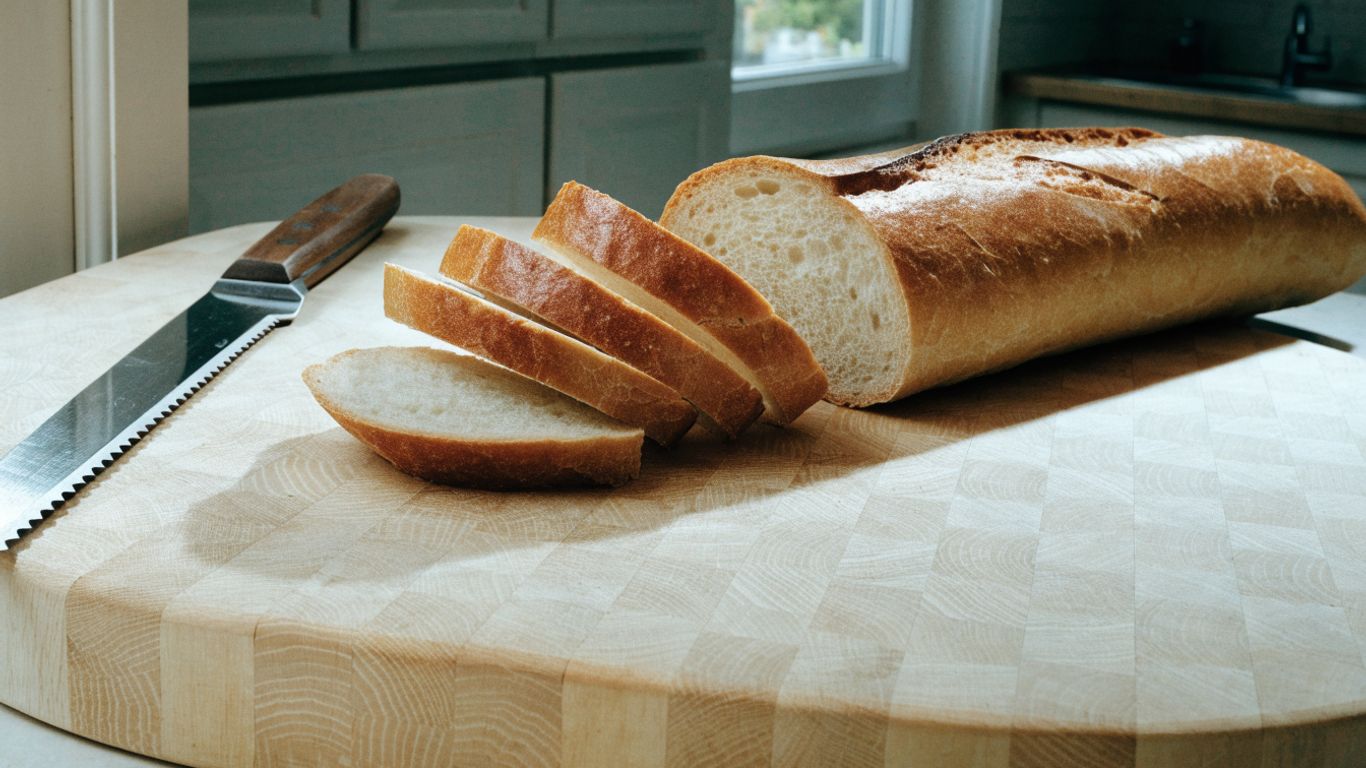
The short answer
To slice a baguette without crushing it, use a sharp serrated knife and let a gentle, steady sawing motion do the work. Set the loaf on a stable board and keep your grip light.
- Choose a serrated knife with a blade long enough to cross the loaf.
- Stabilize the board before you begin, and avoid squeezing the baguette.
- Start with light strokes, then use even back-and-forth passes.
- Adjust your pressure and stroke length for the loaf’s freshness and crust.
- Pause to clear crumbs or reset the board if the knife slips.
Why baguettes get crushed
A baguette’s crisp exterior and soft interior ask for different things from your knife. The crust needs a little sawing to break through, while the crumb compresses easily under downward pressure. A controlled cut protects both textures.
How a crisp crust and airy crumb affect the cut
The crust can resist a blade at first, but the crumb beneath it is full of air pockets and gives way under pressure. If you push down to force the knife through the crust, the loaf may flatten before the blade reaches the board. Think of the job as opening a path through the crust, then continuing through the center without bearing down.
Why pressing down squashes the inside
A baguette is narrow and light, so even a firm hand on top can press its airy center out of shape. Downward force also makes the knife drag instead of glide, which encourages tearing. A light, steady touch keeps the loaf supported without turning it into a flatbread.
How a dull or unsuitable knife makes things worse
A dull blade tends to slide across the crust or catch on it, tempting you to press harder. A smooth-edged knife can also crush the loaf before it cuts through. For a useful overview of blade length, serrations, and technique, see this bread-knife guide.
Choose the right knife
A long serrated bread knife is the dependable choice for a baguette because its teeth can bite into the crust while the blade moves back and forth. The knife should feel comfortable to guide, not so heavy that its weight pushes the loaf down. Match the blade to the loaf and the cut you want.
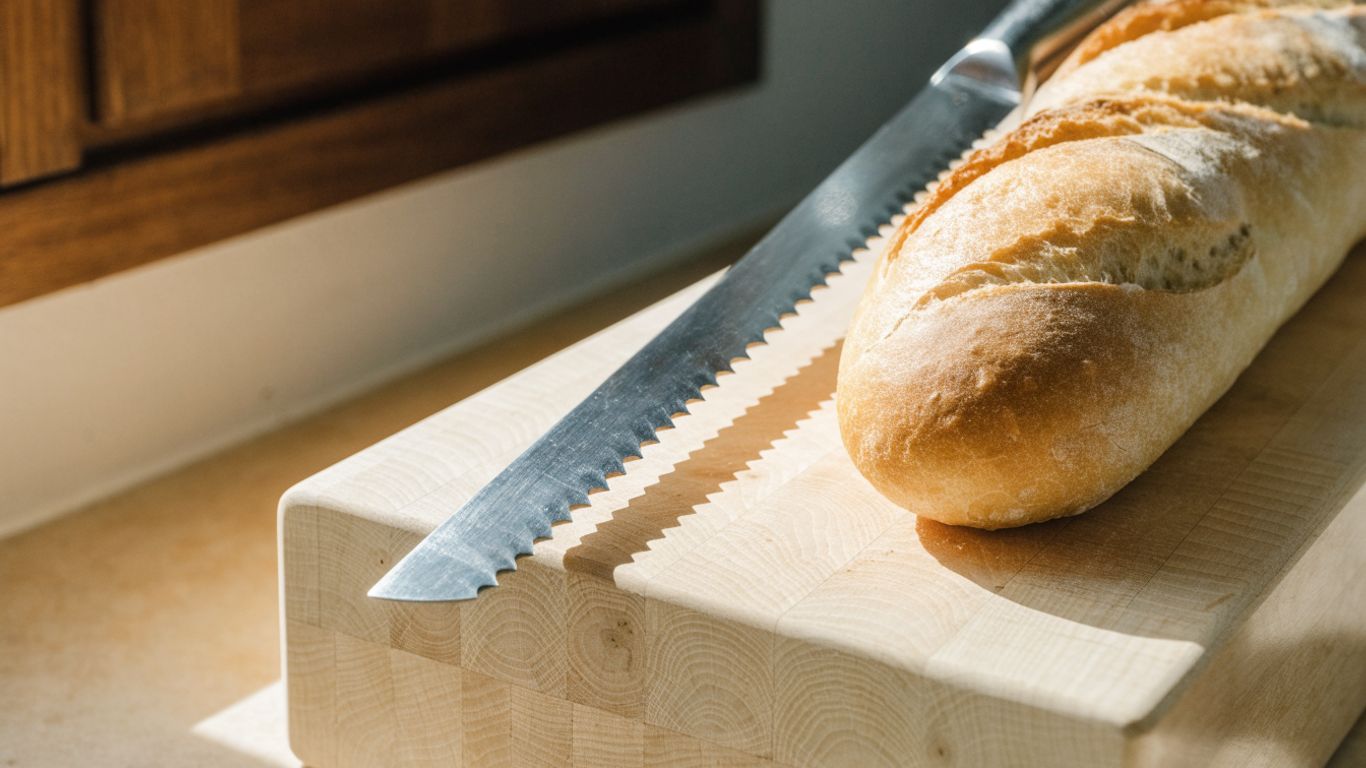
Use a long serrated bread knife
A longer blade can travel across more of the loaf with each stroke, helping you keep the cut level. The serrations grip the crust instead of asking a smooth edge to press through it. A bread knife with a blade around 8 to 10 inches is a practical fit for most baguettes, though the loaf’s length and your comfort matter more than a precise number.
A quick comparison helps explain why blade choice changes the cut. Use it as a guide, not a rule: comfort and a clean, undamaged edge still matter.
| Knife type | What it does at the crust | Main trade-off |
|---|---|---|
| Long serrated bread knife | Sawing teeth grip the crust | Requires room for longer strokes |
| Short serrated knife | Works through a smaller area | May need more passes across the loaf |
| Smooth-edged knife | Can press into the crust | More likely to compress the crumb |
The Bevel & Bond End-Grain Maple Cutting Board is described as knife-friendly, a useful board quality when you’re choosing where to make the cut. It doesn’t change the need for a sharp serrated blade or a gentle hand.
Check that the blade is sharp and undamaged
Look along the blade before cutting. If you see a bent tooth, a damaged section, or feel repeated catching as you saw, switch to another knife rather than forcing the cut. A blade that moves smoothly through the crust lets you keep pressure low and your strokes controlled.
When a smaller knife may work better
A shorter serrated knife can be easier to control if the baguette is short or you’re cutting a small end piece. The trade-off is that you may need more passes to cross the loaf, so keep the blade level as you work. Avoid using a small smooth-edged knife simply because it is handy; it can encourage the pressing that causes crushing.
Set up the baguette and cutting surface
A steady setup makes the cut easier before the knife touches the crust. Choose a flat, stable board with enough room to support the loaf, and position the baguette so you can move the knife without reaching awkwardly. Keep your fingers clear of the blade’s path.
Place the loaf on a stable cutting board
Set the board on a dry, level counter and check that it doesn’t slide when you nudge it. A board that shifts can make your stroke uneven, even if your knife technique is sound. This bread-slicing maple board guide covers board features that can make slicing and serving easier.
The Bevel & Bond end-grain maple board board measures 17 by 13 inches and is 1.75 inches thick, so those dimensions give you a concrete reference when considering workspace. Its product description also lists non-slip feet. Choose a surface that leaves room to guide the knife and catch crumbs without crowding your hands.
Position the baguette for a steady, controlled cut
Lay the baguette flat, with the portion you plan to slice fully supported by the board. If the loaf is longer than your available space, move it as needed rather than letting the end hang unsupported. Turn it so your cutting hand can travel in a straight, comfortable line.
Hold the loaf gently without squeezing it
Rest your fingertips lightly on the top or side, far enough from the cut to keep them safe. Your hand’s job is to stop the baguette from rolling, not to pin it down. If it shifts, pause and reposition it instead of tightening your grip.
Use a sawing motion to slice cleanly
A sawing motion gives the serrations time to engage the crust, so you don’t need to drive the blade downward. Begin gently and keep the blade’s path level as it passes through the loaf. Consistency matters more than speed.
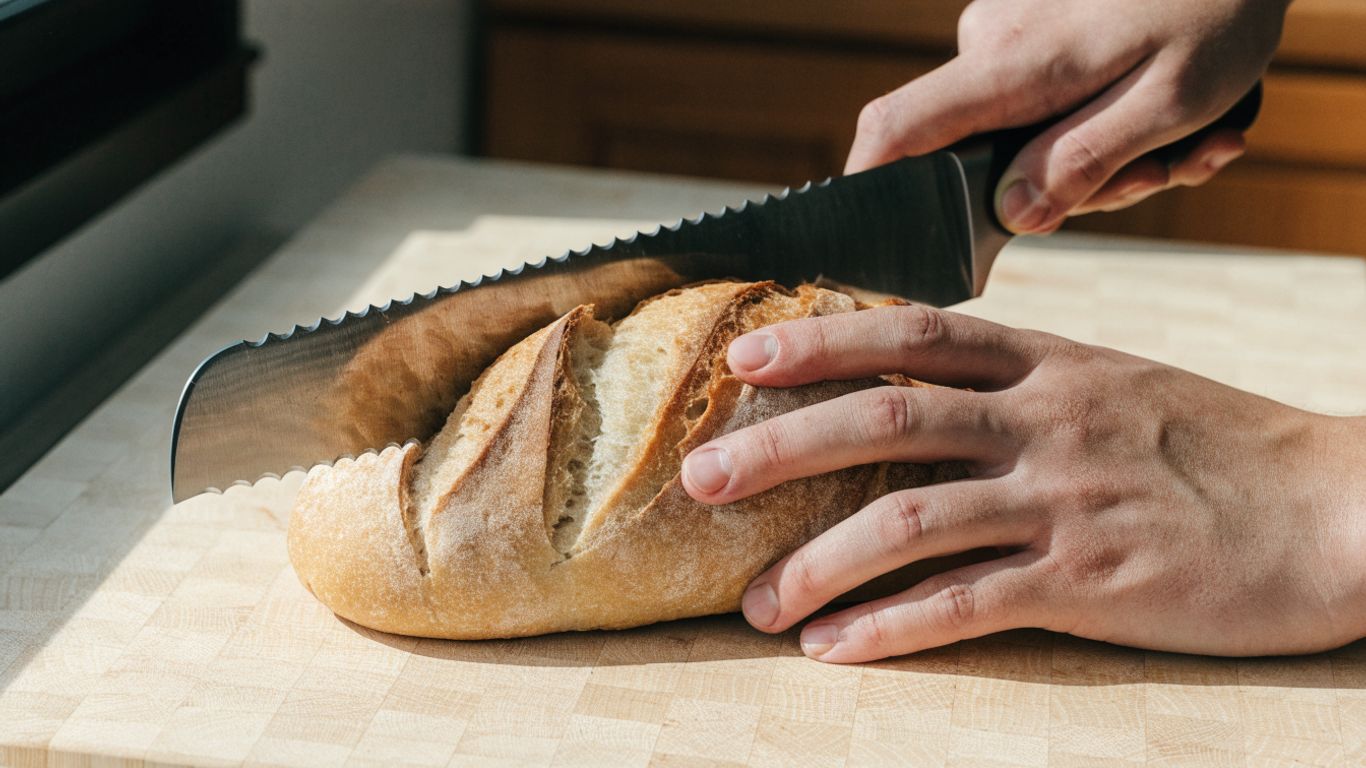
Start with light strokes to break through the crust
Set the knife where you want the slice and draw it back with a short, easy stroke. Repeat in the same track until the crust gives way. Once the blade has started a groove, keep following it rather than changing direction mid-cut.
Let the serrations do the work
After the crust opens, continue the back-and-forth motion through the crumb without leaning on the blade. If you have to force it, stop and check the knife, your grip, and the board’s stability. This demonstration of slicing bread without squashing it offers another approach to getting through the firm crust while protecting the softer interior.
Adjust your stroke for even slices
A steady stroke is easier to repeat than a fast one. Use this small sequence to keep each cut controlled:
- Mark the slice position by resting the blade lightly on the crust.
- Saw back and forth along the same line until the crust breaks.
- Continue through the crumb with even strokes and minimal pressure.
- Lift the knife clear before moving the loaf or beginning another cut.
Then check the slice before cutting again. If one side is thicker, adjust the blade angle slightly on the next pass rather than pushing harder.
Adjust your technique for the loaf and slice
Freshness changes how a baguette responds to the knife. A warm, very fresh loaf has a soft interior that compresses easily, while a day-old loaf tends to shed more crumbs. Adjust your pressure and pace to suit the bread in front of you.
Handle a very fresh baguette without compressing its soft crumb
Let a very fresh baguette cool before slicing if it is still warm from baking; a hot, tender crumb can cling to the blade and flatten under pressure. Use a light hand and take your time through the crust. If the exterior is particularly firm, continue with small sawing strokes rather than pressing down to hurry the cut.
Cut a day-old baguette while limiting crumbs
A day-old baguette may be drier, so crumbs can scatter as the crust breaks. Use a clean board and a sharp serrated knife, then brush crumbs aside between slices if they begin to interfere with the blade. Don’t compensate for a dry crust by bearing down; that can still crush the remaining soft parts.
Slice on a bias for longer pieces or straight across for even rounds
Cutting diagonally across the baguette creates longer pieces from the same loaf, which can be useful for serving. Straight-across cuts make rounder, more uniform portions. Whichever shape you choose, keep the loaf steady and follow one consistent angle through each slice.
Troubleshoot uneven or crushed slices
A crushed slice usually means the loaf is being compressed, the knife is catching, or the board is moving. Stop as soon as you notice the problem and correct the setup before continuing. Small adjustments are usually more helpful than a stronger push.
Reduce downward pressure if the loaf flattens
If the baguette visibly sinks under your hand or the knife, loosen your grip and let the blade work with a gentler sawing motion. Keep only enough contact to prevent the loaf from rolling. The Bevel & Bond End-Grain Maple Cutting Board has non-slip feet, but check that the counter and board are dry and level before relying on any cutting surface to stay put.
Use longer strokes if the crust tears
Short, choppy strokes can repeatedly catch at the same spot and tear the crust. Draw the blade farther back and forward while keeping it level, especially after the first opening cut. If the blade still snags, inspect it for damage or switch to a sharper serrated knife.
Clear crumbs and steady the board if the knife slips
Crumbs under the loaf or board can make the setup less stable, and crumbs along the cut can get in the blade’s way. Pause before moving anything near the knife, clear the work area, and reset the baguette. Resume only when the board is steady and your hands have a clear path.
What to remember when you slice a baguette without crushing it
A baguette stays closer to its original shape when you use a sharp serrated knife, keep the loaf supported, and saw gently instead of pressing down. Start with the crust, keep your strokes even, and adjust your touch to the bread’s freshness; the cleanest cut is usually the one you don’t force.
Frequently Asked Questions
A few small choices, from blade style to slice angle, can make baguette cutting easier. These answers cover the common points to check when a loaf keeps tearing or flattening.
What knife should you use to slice a baguette?
Use a sharp serrated bread knife with a blade long enough to cross the loaf comfortably. Its teeth can cut through the crust with a sawing motion and less downward pressure.
How do you keep a baguette from getting crushed?
Hold it gently and saw back and forth rather than pressing the knife down. If the loaf flattens, reduce your grip and check that the knife is sharp.
Should you cut a baguette warm or let it cool?
If it is still warm from baking, let it cool before slicing. A very fresh, warm crumb can be soft and may compress or cling to the blade.
How thick should baguette slices be?
Choose a thickness that suits how you plan to serve them. Keep the blade angle and stroke consistent if you want slices of similar size.
Is it better to cut a baguette straight or on a bias?
Straight-across cuts make rounder pieces, while diagonal cuts create longer slices. Both work well when you keep the blade level and use a steady sawing motion.
Why does my bread knife tear the crust?
The knife may be dull or damaged, or your strokes may be too short and choppy. Check the blade and try longer, even passes without pressing down.
Can you slice a day-old baguette cleanly?
Yes. Use a sharp serrated knife, keep the board clear of loose crumbs, and saw gently through the drier crust. Avoid adding downward pressure to compensate for the loaf’s texture.