MAPLE BOARDS
How to cut a bell pepper into strips: A simple step-by-step guide
Learn how to cut a bell pepper into strips with clean prep, even slices, and less mess.
The short answer
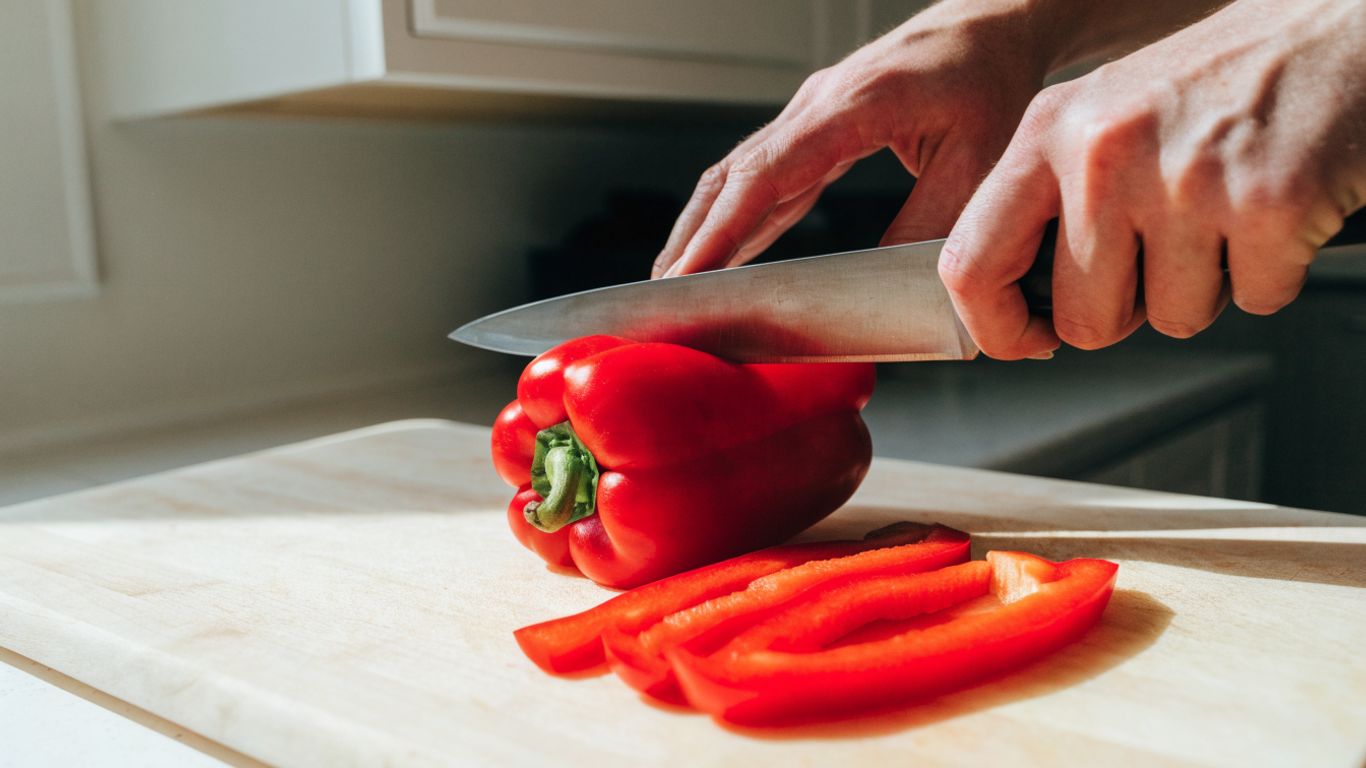
To cut a bell pepper into strips, remove the top and core, open the pepper, then slice the flattened flesh lengthwise. A dry pepper, stable board, and steady knife strokes make the job tidier and easier to control.
- Choose a firm pepper with smooth skin and a fresh-looking stem.
- Rinse and dry it before cutting, and use a stable board and sharp knife.
- Remove the stem and seed cluster, then trim away any remaining ribs.
- Flatten the pepper skin-side down and slice lengthwise to your preferred width.
- Refrigerate clean, dry strips in an airtight container and use them within a few days.
Choose and prepare the pepper
For neat strips, start with a pepper that feels firm and set up a clean, dry work surface. A little preparation helps the pepper stay put while you cut. You do not need special equipment, just a sharp knife and a board with enough room to work.
Look for firm skin and a fresh stem
Choose a pepper with taut, glossy skin and no soft or sunken spots. The pepper should feel heavy for its size, and the stem should look green and fresh rather than dry or shriveled. A slightly uneven shape is fine; you will flatten the pieces later.
Rinse the pepper and dry it well
Rinse the pepper under cool running water, rubbing the surface gently with your hands. Dry it with a clean towel before it reaches the board. A wet pepper can slide around, and water left on the skin may make the knife harder to guide.
Set up a stable cutting board and sharp knife
Place the board on a flat counter and check that it does not shift when you press down lightly. A sharp chef’s knife or utility knife works well; a dull blade tends to slip or crush the flesh. For more on choosing a useful prep surface, see this guide to a maple cutting board for vegetables. The Bevel & Bond End-Grain Maple Cutting Board measures 17 by 13 inches and has non-slip feet, details that may be useful when considering a board for everyday prep.
Cut off the top and remove the core
Removing the stem end gives you access to the seed cluster and inner ribs. Work over the board so stray seeds are easy to gather, and keep the pepper steady rather than forcing the knife. This method leaves you with broad pieces that are simple to flatten and slice.
Slice around the stem to lift off the top
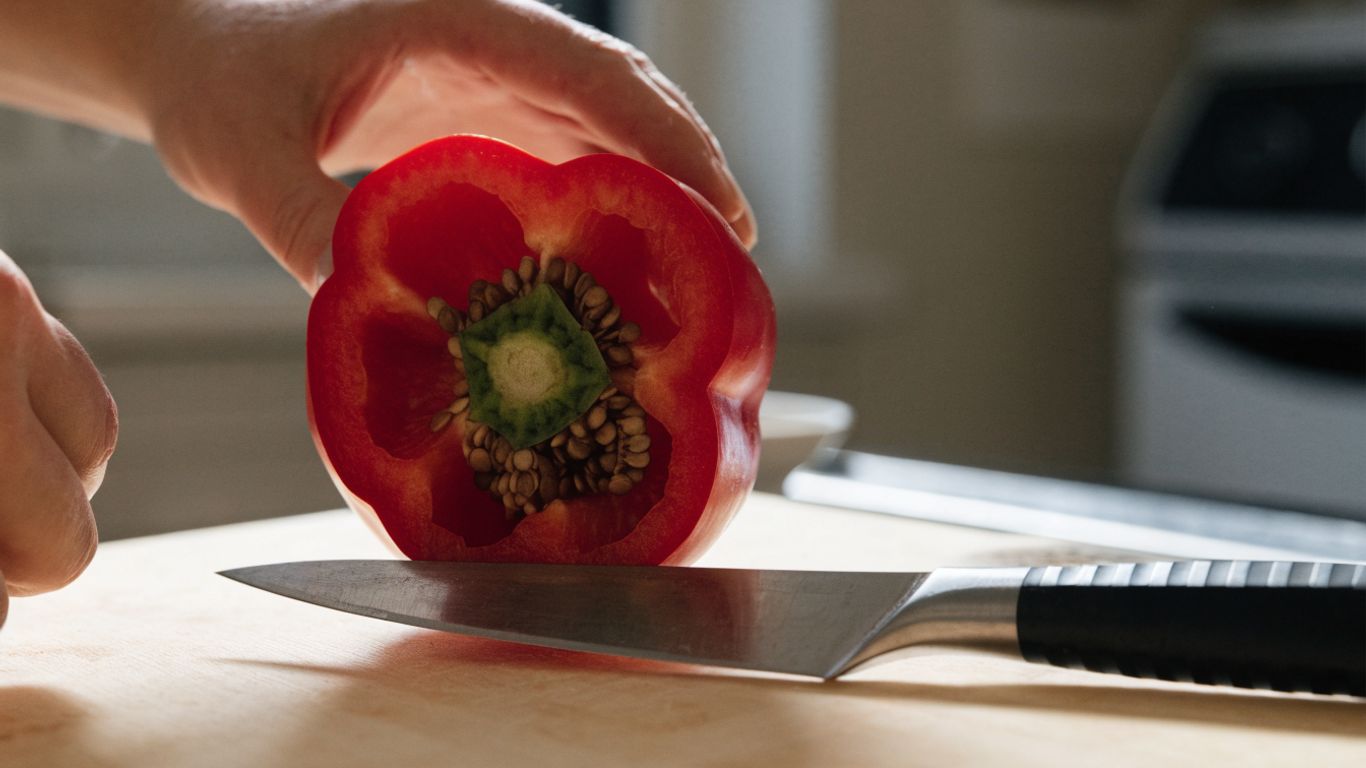
Stand the pepper upright on its base. Use the knife to cut a small circle around the stem, angling the tip inward enough to separate the top from the walls. Lift off the top and set it aside; avoid cutting deeply into the flesh, since that leaves less pepper for strips.
Pull out the seed cluster
Grip the stem and pull the top gently away from the pepper. Often, the central cluster comes with it. If it does not, reach into the pepper and pull the cluster free, then shake loose seeds into the compost or trash.
Trim away leftover seeds and white ribs
A few seeds or pale ribs may remain attached inside. Scrape them away with the knife tip, or use your fingers for loose seeds. Trim only the thicker ribs that feel tough; thinner sections are edible and can stay in place without affecting most cooked dishes.
Open the pepper for easier slicing
Open the pepper into a broad, flatter piece before making strips. This reduces rocking and gives you a clear line to follow with the knife. Bevel & Bond End-Grain Maple Cutting Board is 17 by 13 inches, so check that your board has enough clear space to lay the pepper out comfortably.
Cut through one side to open it
Set the pepper on its side and make one lengthwise cut through the wall, from the cut top toward the base. Stop when the pepper opens into a single piece. If the bottom curves inward, cut through that section too rather than pressing the pepper flat with force.
Lay the pepper skin-side down
Turn the opened pepper so its skin rests on the board and the flesh faces up. The skin provides a grippy surface, while the inside is easy to inspect for missed seeds or ribs. If a section still rocks, trim a small piece from its edge to help it lie flatter.
Flatten curved sections before cutting
Press the pepper gently with your palm to settle it against the board. It does not need to become perfectly flat; aim for an even surface that will not roll under the blade. If you want another approach to opening a pepper, this core-intact cutting method offers a different way to handle the seeds.
Slice the pepper into strips
Once the pepper is flat, cut from top to bottom in long strokes. Keep the strips parallel and use a width suited to how you plan to cook or serve them. Even pieces cook at a more similar rate, though a little variation is harmless in a weeknight meal.
Choose a strip width for your recipe
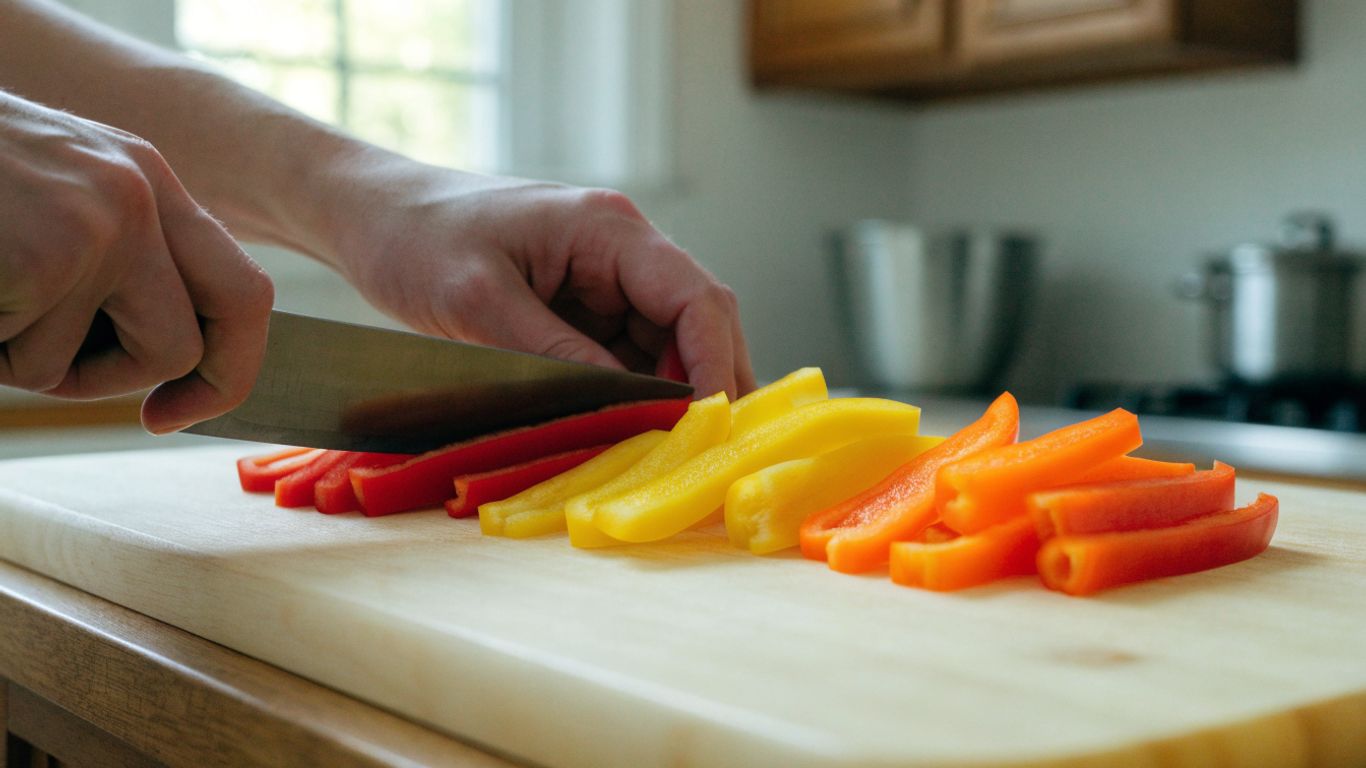
There is no single correct width. Thin strips cook quickly and tuck neatly into fillings, while wider strips are sturdy enough for dipping or roasting. Use this quick guide to pick a starting point, then adjust to suit the dish.
| Strip width | Good for | What to expect |
|---|---|---|
| About ⅛ inch | Quick stir-fries | Cooks quickly; watch closely |
| About ¼ inch | Fajitas and salads | Flexible everyday size |
| About ½ inch | Dipping or roasting | Sturdier, more substantial pieces |
The measurements are useful targets, not rules. For a mixed pan of vegetables, keep the pepper strips close in width to the other ingredients so they finish at roughly the same time.
Cut lengthwise with steady, even strokes
With the pepper flesh-side up and its long direction facing you, slice lengthwise from one end to the other. Let the knife do the work, using smooth strokes instead of chopping straight down. If the piece shifts, pause and reposition it before continuing. The Bevel & Bond End-Grain Maple Cutting Board has non-slip feet; whatever board you use, make sure it is secure before slicing.
Keep your fingertips tucked as you guide the knife
Curl your fingertips inward and use your knuckles to guide the side of the blade. Keep the hand holding the pepper behind the cutting edge, and move it back gradually as the pepper gets smaller. A slower, controlled stroke is safer than trying to race through the whole piece.
Adjust the strips for different uses
You can change the width or length of the strips to suit the meal without changing the basic cutting method. Choose a size that makes sense for how the pepper will be cooked or served. The trade-off is simple: thinner pieces cook faster, while wider ones hold their shape better.
Make narrow strips for stir-fries and fajitas
Cut strips around ⅛ to ¼ inch wide when you want them to soften quickly in a hot pan. Try to keep the pieces similar in thickness so some do not turn limp while others are still crisp. For fajitas, slightly wider strips can be easier to pick up with a fork or tuck into a tortilla.
Cut wider strips for dipping or roasting
For a snack plate, cut the pepper into sturdy strips about ½ inch wide. Wider pieces are easier to hold and less likely to bend under a dip. They also suit roasting, where thin strips can soften quickly; turn them partway through cooking if you want the edges to brown more evenly.
Shorten long strips for salads and quick-cooking dishes
Long strips work well as they are for wraps or dipping, but shorter pieces can be easier to eat in salads and cooked dishes. Gather a few strips together and cut them crosswise into bite-size lengths. A calm prep setup helps keep the pieces organized; this three-zone board setup explains one way to arrange ingredients as you cook.
Handle scraps and store the strips
Before putting the knife away, check the strips and sort the remaining pepper pieces. The stem and seed cluster are usually discarded, but clean flesh from the top or bottom can still be useful. Store the cut pepper promptly so it stays crisp and ready for another meal.
Check for stray seeds or tough ribs
Spread the strips out briefly and remove any seeds that escaped the core. Feel for thick, fibrous pieces of rib and trim them if you find them. A few thin white bits are harmless, but removing the tougher ones makes the finished strips more pleasant to eat.
Save usable pepper pieces for another recipe
The trimmed top and bottom often include small pieces of good pepper flesh. Cut those bits away from the stem and any damaged areas, then use them soon in a cooked dish. You can add the scraps to a short list of everyday uses:
- Stir them into eggs or an omelet.
- Add them to soup, chili, or a pan of sautéed vegetables.
- Chop them for salsa or a chopped salad.
Keep scraps separate from the stem and seed cluster, and do not save pieces that are bruised, slimy, or otherwise spoiled. If you are making a larger batch, this fresh pico de gallo guide also offers a use for chopped pepper alongside other fresh ingredients.
Refrigerate cut strips in an airtight container
Put clean, dry strips in an airtight container and refrigerate them soon after cutting. A paper towel in the container can absorb excess moisture; replace it if it becomes damp. For best texture, use the strips within a few days and discard them if they develop an off smell, sliminess, or visible spoilage.
What to remember when you cut a bell pepper into strips
A firm pepper, dry board, and steady lengthwise cuts are all you need for tidy strips. Remove the core, flatten the pepper skin-side down, and choose a width that suits the dish; then save any clean scraps and refrigerate what you do not use.
Frequently Asked Questions
Should you cut a bell pepper before washing it?
No. Rinse the whole pepper under cool running water first, then dry it well before cutting. This helps keep dirt off the cut surfaces and makes the pepper less slippery on the board.
Do you need to peel a bell pepper before slicing it?
No. The skin is edible, and most recipes use the pepper with its skin on. Slice through the flesh and skin together with a sharp knife.
Which direction should you slice a bell pepper for strips?
After opening and flattening the pepper, cut lengthwise along its natural height. This gives you long strips that are easy to shorten later if your recipe calls for bite-size pieces.
How wide should bell pepper strips be?
Use about ⅛ to ¼ inch strips for quick-cooking dishes, and wider pieces around ½ inch for dipping or roasting. The best width depends on the recipe and how much bite you want.
How do you keep bell pepper strips from rolling while you cut?
Open the pepper and lay it skin-side down so the surface rests more securely on the board. Trim a small amount from any section that still rocks, and keep your guiding fingertips tucked behind the blade.
Can you eat the white ribs inside a bell pepper?
Yes, the pale ribs are edible. They can taste less tender than the pepper wall, so trim away thicker or fibrous sections if you prefer a softer bite.
How long do cut bell pepper strips last in the refrigerator?
Store dry strips in an airtight container in the refrigerator and use them within a few days for the best texture. Throw them away if they become slimy, smell off, or show signs of spoilage.