MAPLE BOARDS
How to cut a watermelon into cubes: a simple, mess-free method
How to cut a watermelon into cubes neatly with a steady setup, simple knife steps, and smart storage tips.
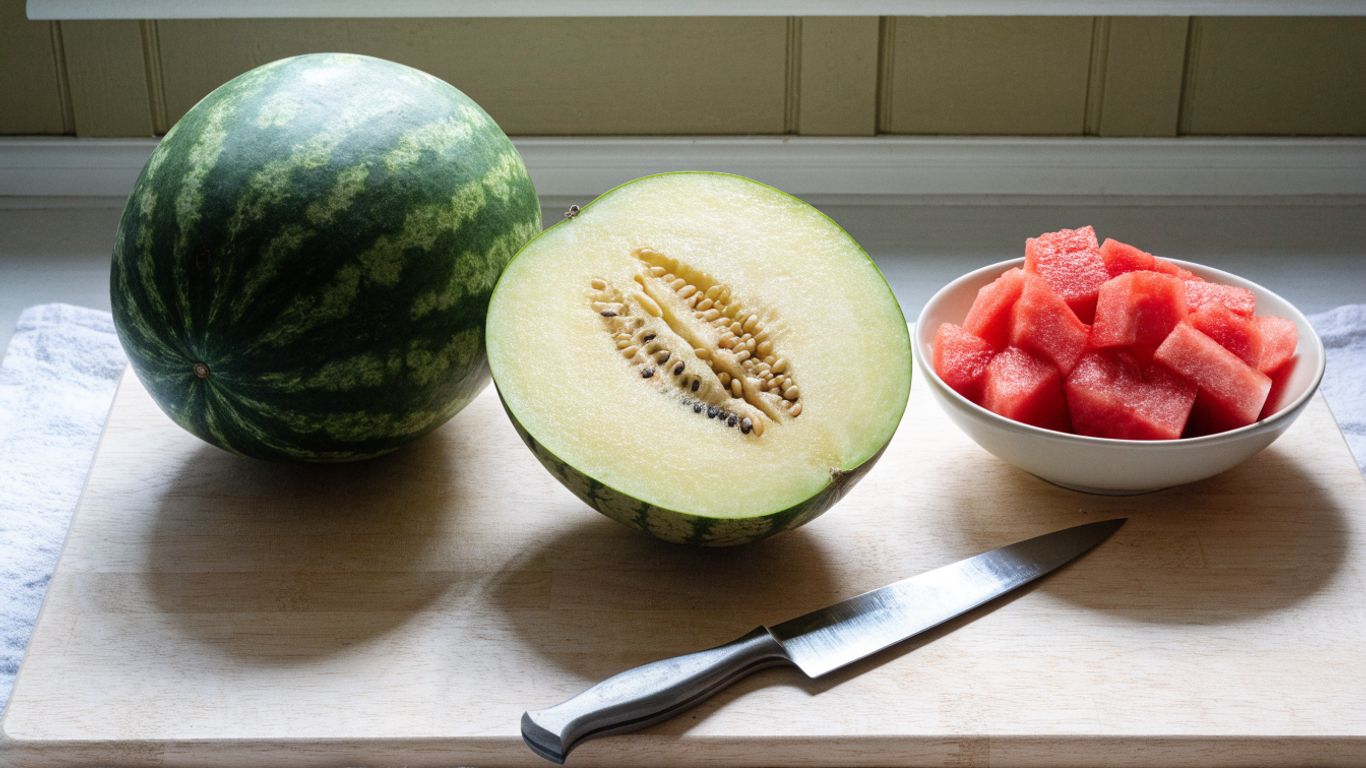
The short answer
A sharp knife, a stable board, and a few deliberate cuts make it much easier to cut a watermelon into cubes without chasing juice around the counter.
- Choose a firm, heavy melon with a creamy yellow field spot.
- Wash and dry the rind, then steady the melon on a large cutting board.
- Trim the ends, halve the melon, and remove the rind in manageable sections.
- Cut the flesh into slabs, strips, and then cubes of your preferred size.
- Refrigerate the cubes promptly in a covered container and clean up the sticky juice.
Choose and prepare the watermelon
For the cleanest cuts, start with a ripe, firm watermelon and give yourself enough room to work. Washing the rind before cutting helps keep dirt from transferring to the flesh as your knife passes through it. A stable board and a sharp knife do more for an easy, tidy prep session than speed ever will.
Look for a ripe melon with a creamy yellow field spot
Choose a melon that feels heavy for its size and has a creamy yellow patch where it rested on the ground. The rind should look firm and fairly even, without deep soft spots or large bruises. A field spot that is pale or nearly white can mean the melon was picked before it had as much time to ripen. Once home, keep the melon whole until you are ready to cut it.
Wash and dry the rind before cutting
Rinse the whole melon under cool running water and rub the rind with clean hands to remove visible dirt. Dry it with a clean towel; a wet rind can be slippery when you begin trimming. Even though you will discard the rind, your knife travels through it and then into the flesh, so a quick wash is a sensible first step.
Set up a stable cutting board and sharp knife
Set a large board on a level counter, with a damp towel underneath if the board shifts. Use a sharp chef’s knife long enough to cut through the melon without forcing the blade. Before you start, clear away clutter and keep a bowl nearby for the cubes and a compost or trash container for the rind.
A simple setup keeps the work controlled, especially when the melon is large. Gather these few things before you make the first cut:
- A stable cutting board with room to turn the melon
- A sharp chef’s knife and a clean towel
- A wide bowl or airtight container for the cut fruit
- A small bowl or bin for rind and scraps
Once everything is within reach, you can focus on steady cuts instead of moving a slippery melon around a crowded counter.
Cut the watermelon in half
Trim the ends first so the melon can sit flat, then cut it lengthwise through the center. The flat base gives you a steadier position for the longer cut. Work slowly and keep your free hand away from the knife’s path.
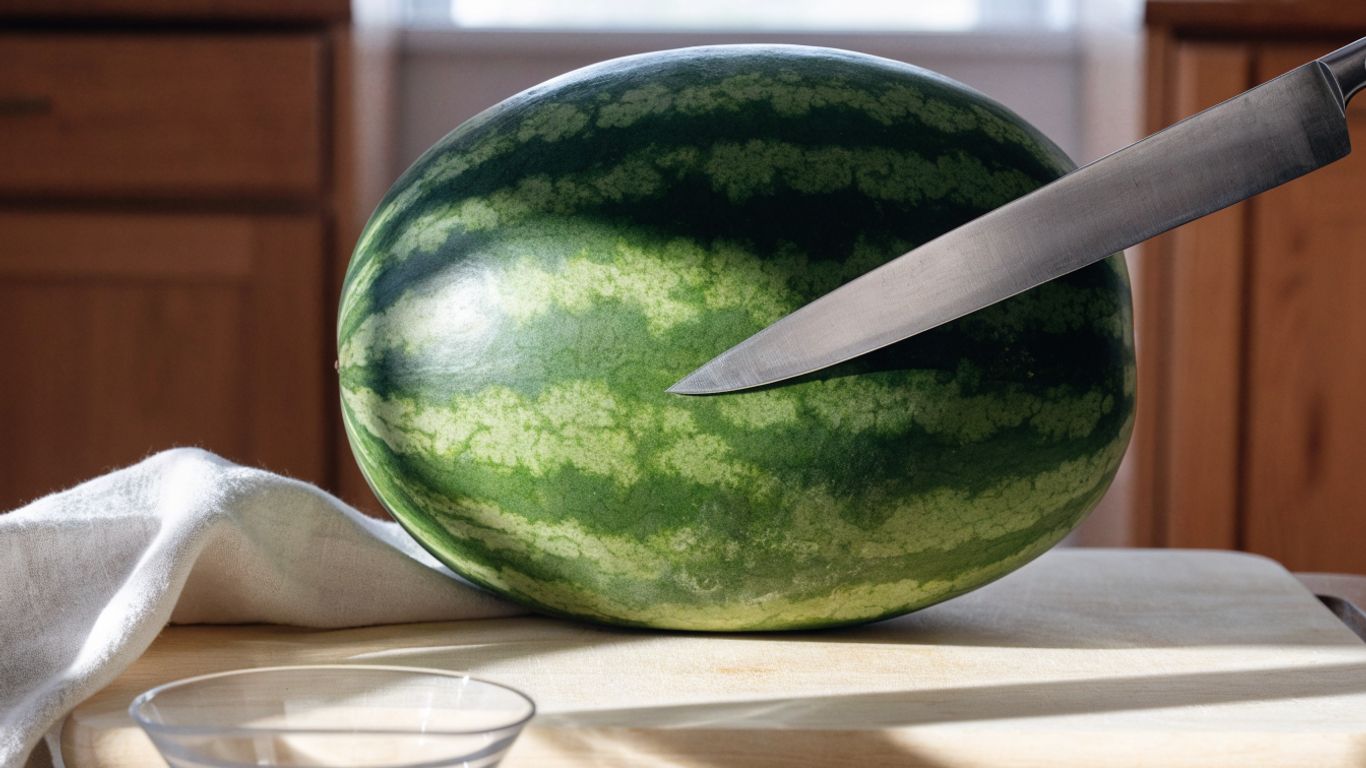
Trim a thin slice from each end
Lay the melon on its side and slice a thin piece from each end, just enough to expose a flat surface. You do not need to remove much fruit; the aim is to create stable bases for peeling. If the ends are uneven, take another small shaving rather than trying to balance the melon on a slant.
Stand the melon on a flat end
Set the melon upright on one of the trimmed ends and check that it rests securely. If it rocks, lay it down and trim the base a little more. Keep your fingertips clear of the blade and do not try to hold the melon steady by gripping the sides while cutting.
Cut it lengthwise through the center
Starting at the top, guide the knife down through the center of the melon to split it into two halves. Use a controlled sawing motion if the rind resists, rather than pushing hard with one sudden stroke. If you want to see another watermelon cutting approach, the same basic attention to ripe fruit and careful knife work applies.
Remove the rind from each half
Peel each half before cubing so you can cut the flesh into even pieces without the rind getting in the way. Work with one half at a time and keep the cut face supported on the board. You may find it easier to rotate the half as you trim, rather than reaching across it.
Place a half cut-side down for stability
Put one half cut-side down on the board. Its broad, flat surface should keep it from rolling while you remove the rind. If it still wobbles, adjust the position or trim a small amount from the underside to make a steadier base.
Slice the rind away in sections from top to bottom
Starting at the top edge, slice down along the curve of the melon, following the boundary between the red flesh and the pale rind. Remove the rind in broad sections, turning the half as you go. Keep the knife angled slightly toward the rind so you leave as much fruit as possible. Take smaller cuts around the curve rather than trying to peel away one oversized strip.
Trim away any remaining white rind
Look over the surface and shave off patches of white rind that remain. A thin pale line is fine, but thick pieces are tough and can make the cubes less pleasant to eat. A board suited to fruit prep can help manage some of the juice; here are more ideas for chopping fruit and vegetables for maple boards while keeping an eye on the board and counter.
Cut the flesh into cubes
Once the rind is off, turn the half into slabs, then strips, then cubes. Keep the cuts parallel and use a size that suits how you plan to serve the fruit. Consistent cuts make serving easier, though a little variation is perfectly fine for a casual snack bowl.
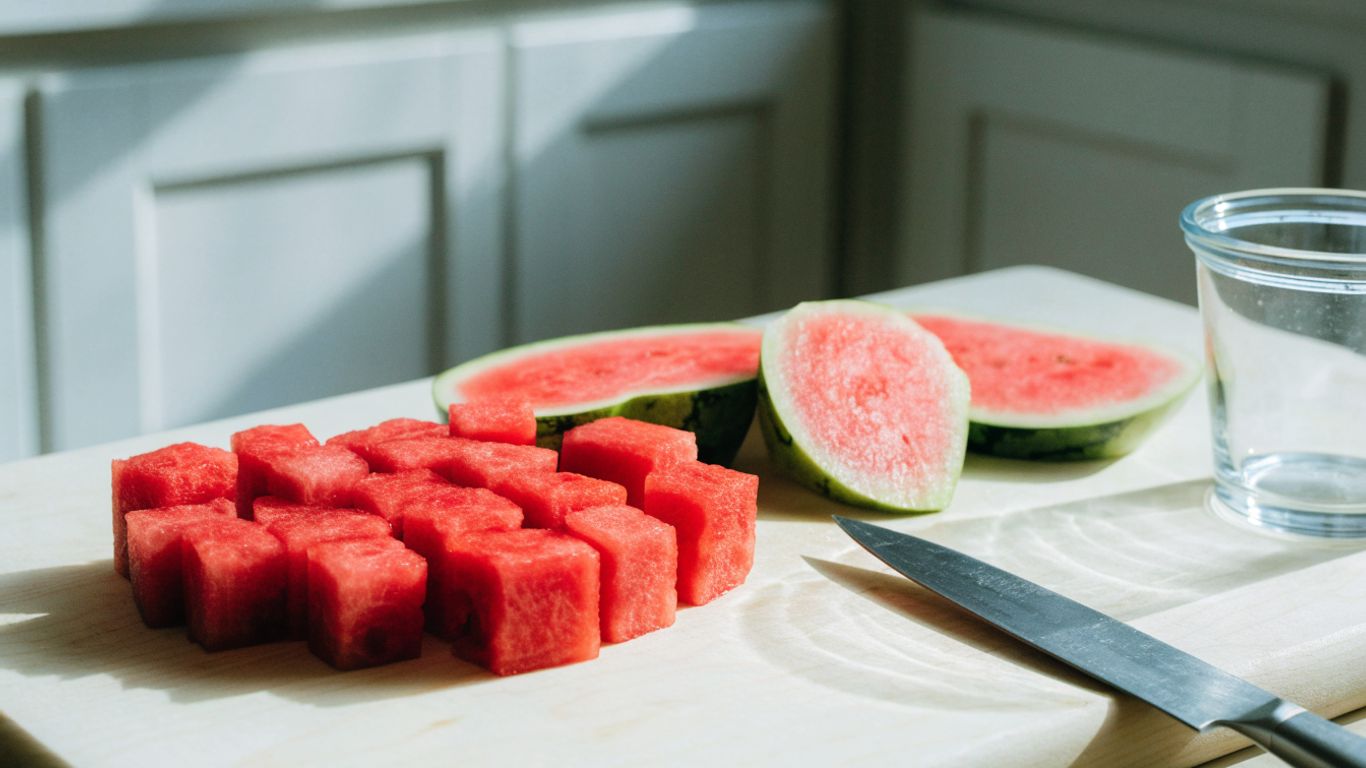
Slice the peeled half into even slabs
Lay the peeled half on its side, or place it on its broad flat face if that feels steadier. Cut crosswise into slabs of roughly equal thickness. Aim for about ¾ to 1 inch for everyday cubes, and keep your guiding hand curled away from the knife. If the melon is especially large, divide the half into smaller sections before slicing.
Cut the slabs into strips
Stack a few slabs only if they sit securely; otherwise, leave them in a single layer. Cut each slab lengthwise into strips matching the thickness you chose. A sharp knife will move cleanly through the flesh, while a dull one tends to compress it and send more juice across the board. Take a moment to wipe the board if juice starts making the pieces slide.
Turn the strips and cut across them to make cubes
Turn the strips a quarter turn and cut across them at even intervals. The result is a batch of cubes ready for a bowl or container. A short video can help you picture the sequence of cuts before you try it yourself.
Adjust the cube size and handle uneven pieces
There is no single right cube size; choose one that works for the dish and the people eating it. Smaller pieces fit easily into fruit salads, while larger ones are easier to pick up for snacking. If a section is oddly shaped, cut it into pieces of similar size rather than chasing a perfect grid.
Choose smaller cubes for fruit salads
For a fruit salad, cut cubes around ½ inch so they mix easily with other ingredients and fit on a fork. If you are adding watermelon to a salad with delicate ingredients, cut it over a bowl and let excess juice drain briefly before combining. For more tidy produce prep, the same steady setup helps when you cut bell pepper into strips.
Make larger cubes for snacking or grilling
For snacking, cubes around 1 inch are easy to pick up and less likely to fall apart in the bowl. Larger pieces also hold together better if you plan to grill them on skewers. Use a clean platter for serving, and keep the rest chilled until you are ready to bring it out.
A quick size guide can help you choose without measuring every piece. Treat these as starting points, then adjust to the recipe or occasion.
| Cut size | Works well for | Helpful note |
|---|---|---|
| About ½ inch | Fruit salads | Mixes easily with other ingredients |
| About ¾ inch | General serving | A handy middle ground |
| About 1 inch | Snacking | Easy to pick up and portion |
| Larger chunks | Skewers or grilling | Keep pieces similar in size |
For the most even cooking on skewers, keep the chunks close in size. For a bowl at home, a mix of sizes is no problem; the fruit will taste the same either way.
Cut around seeds or soft spots as needed
If you find seeds, slice around them and discard them, or remove them from individual cubes with the tip of the knife. Trim away any bruised or overly soft areas. A very soft section may not hold a neat cube, so set it aside for a smoothie or eat it soon rather than trying to force it into the same shape as firmer pieces.
Store the cubes and clean up
Move the cubes into a clean, covered container and refrigerate them promptly. Cut watermelon is perishable, so do not leave it sitting on the counter while you finish other kitchen tasks. A quick rinse of the board and knife also makes cleanup easier before the juice dries sticky.
Transfer the cubes to an airtight container
Scoop the cubes into a clean airtight container, leaving out any pooled juice if you prefer a less wet serving bowl. Do not pack them down; gentle handling helps the pieces keep their shape. If you have more fruit than you will eat soon, divide it between smaller containers so you can open only what you need.
Refrigerate and use within a few days
Cover the container and refrigerate the cubes, ideally at 40°F or below. Return the container to the fridge after serving and use the cut fruit within a few days for the best texture. If it has been left at room temperature for more than two hours, discard it rather than relying on smell alone to judge safety.
Wash the knife and board promptly to remove sticky juice
Rinse the knife and board soon after cutting, then wash the board by hand with warm water and mild soap. Dry it thoroughly, especially if it is wood. For a wooden board, keep the wash brief and avoid soaking; more guidance on cleaning a maple cutting board can help you keep fruit prep from turning into a sticky chore.
What to remember when you cut a watermelon into cubes
A whole watermelon is straightforward to cube when you steady it first, remove the rind in manageable sections, and cut the flesh in a simple slab-strip-cube sequence. Choose the size that suits your meal, keep the fruit chilled, and clean the board while the juice is still fresh.
Frequently Asked Questions
Do you need to wash a watermelon before cutting it?
Yes. Rinse and rub the rind under cool running water, then dry it before cutting so dirt on the outside is less likely to transfer to the flesh.
What knife works best for cutting watermelon?
A sharp chef’s knife with a blade long enough to span the melon is a practical choice. A sharp edge cuts with less force, which helps you stay in control.
How big should watermelon cubes be?
Use about ½-inch cubes for fruit salads and roughly ¾- to 1-inch cubes for general serving or snacking. Larger chunks work for skewers or grilling.
How do you keep watermelon from sliding while cutting?
Use a stable board on a level counter and trim a thin slice from each end to create flat surfaces. Set the melon securely on one of those flat ends before cutting.
Can you cube watermelon with the rind still on?
You can make cuts into a rind-on section, but peeling first makes it easier to portion uniform, ready-to-eat cubes. It also avoids having to remove rind from each piece later.
How long does cut watermelon keep in the refrigerator?
Keep it covered and refrigerated, and aim to use it within a few days for the best texture. Discard cut fruit left at room temperature for more than two hours.
Can you freeze watermelon cubes?
Yes. Spread the cubes in a single layer on a tray until firm, then transfer them to a freezer-safe container. Thawed watermelon becomes softer, so frozen cubes work better in blended drinks than as fresh, crisp snacks.
SEE AN EXAMPLE